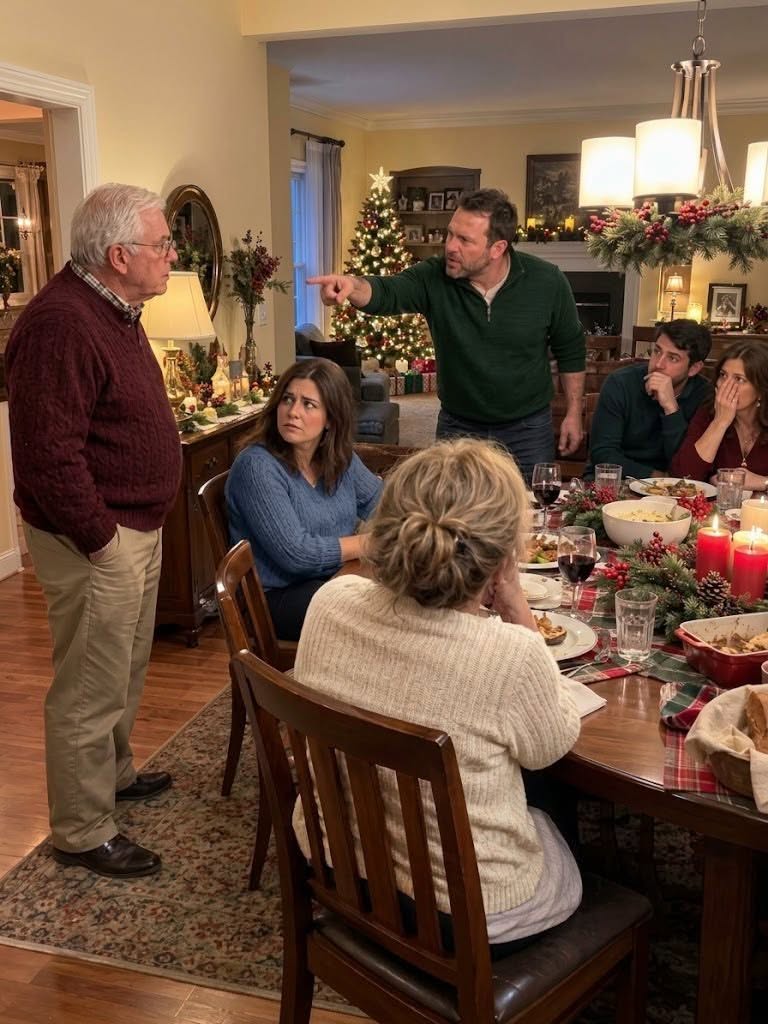
The house had cost $640,000.
I had contributed $190,000 toward the down payment,
and I had guaranteed the mortgage because
Daniel’s business income was irregular.
The arrangement had been straightforward.
I would help him establish a stable home for his family,
and he would take responsibility for the remaining expenses.
At least, that was what I believed.
“Who received the money?” I finally asked.
“That’s where things become interesting.
Most of it went to an account belonging to Daniel’s company.
But some of it went to a private account registered to Vanessa.”
I closed my eyes.
“How much?”
“Forty-two thousand dollars.”
I remembered Vanessa’s new jewelry. The designer handbags that appeared every few months. The weekend trips she described as necessary networking. I had never questioned any of it because I thought my son was building a future for his family.
“Can the bank tell who signed the application?”
“They have a digital signature, an electronic authorization, and copies of the identification documents used to verify the application. They’re investigating whether the documents were genuine.”
I stood and walked to the window.
Below me, traffic moved through the city as if nothing in my world had changed.
“Evelyn, I want every document. Every application, every transfer, every authorization.”
“You’ll have them. But I need you to understand something else. Because you guaranteed the original mortgage, the bank may attempt to involve you if Daniel defaults. The unauthorized credit line complicates matters.”
“Am I responsible for that money?”
“Not necessarily. A forged or unauthorized agreement may be challengeable, but we need to preserve the evidence and establish exactly what happened.”
I looked down at my hands.
For years, I had believed money was the language through which I could protect my son from the hardships I had experienced. After his mother died, I had used it to keep him close, to make sure his children never worried about bills, and to convince myself that our family was still whole.
Now I wondered whether I had been protecting him from consequences he needed to face.
“What should I do?” I asked.
“Don’t confront them yet. Don’t destroy anything. Don’t access any account you aren’t authorized to access. Let me work with the bank.”
I agreed.
Then Evelyn added, “Thomas, there’s one more thing. The bank’s fraud team wants to speak with you in person. They believe the credit application may be connected to another document.”
“What document?”
“A change to the ownership records of the property.”
My stomach tightened.
“What kind of change?”
“They’ll explain when we meet. But for now, don’t sign anything Daniel or Vanessa sends you.”
After the call ended, I sat in silence for nearly ten minutes.
Then my phone rang.
Daniel.
I let it ring.
He called again.
Then Vanessa.
Then Daniel again.
Finally, a text appeared.
Daniel: Dad, what have you done? The bank says the household account is frozen. Call me immediately.
I read it twice.
Not Are you okay?
Not Where did you go?
Not even I’m sorry about last night.
Just the money.
I typed a reply, then deleted it.
There was nothing I could say that would make him understand something he had spent years refusing to see.
I put the phone facedown and went to meet my attorney.
The bank’s fraud investigator was a woman named Rebecca Cole. She was in her early fifties, with silver-framed glasses and the calm expression of someone accustomed to delivering bad news.
She spread several documents across the conference table.
“The home-equity application was submitted digitally,” she explained. “The identification documents included your driver’s license and information from your existing mortgage file. The application also contained a signature purporting to be yours.”
“Was it?”
“No. The handwriting is different, and the electronic records raise questions about how the authorization was obtained. We are conducting a formal investigation.”
She turned to another page.
“This document concerns the property itself.”
It was a copy of a transfer instrument.
My name appeared near the bottom.
The document purported to transfer my interest in the house to Daniel and Vanessa, making the property available as security for additional borrowing.
I read the page slowly.
“I never signed this.”
“We understand that,” Rebecca said. “However, we need to establish when the document was prepared, who submitted it, and whether it was legally recorded.”
Evelyn leaned forward.
“Has the transfer been registered?”
“The county records show a filing was submitted. There is a discrepancy in the supporting documentation, and our legal department is reviewing it.”
I looked at my attorney.
She gave me a small, reassuring nod.
“We’ll obtain certified copies and challenge anything unauthorized.”
Rebecca then produced a transaction summary.
“The credit line was used to pay several business creditors. Some funds also went toward personal expenses. The transfers to Vanessa’s account are particularly concerning because the application represented that the funds would be used primarily for property improvements and business expansion.”
I felt an unexpected wave of sadness.
I could understand desperation. I had built my own company from almost nothing. I had missed birthdays, worked through holidays, and spent years wondering whether I would be able to make payroll.
I had even gone without a new car for eleven years because my employees needed their wages more than I needed leather seats.
But I had never forged my wife’s name. I had never stolen from my children. I had never taken money from someone who trusted me and then accused that person of being a burden.
“Do you have evidence that Daniel submitted these documents?” I asked.
“Not conclusive evidence yet,” Rebecca said. “We are examining the access logs and communications associated with the application.”
She paused.
“There’s another issue. The company account that received most of the money is carrying substantial unpaid obligations. Several payments were made to creditors shortly before the holidays.”
“Is Daniel’s company in trouble?”
Rebecca glanced at Evelyn.
“We cannot disclose every detail of the company’s accounts. But the financial position appears considerably worse than the information provided in the loan application.”
The pieces began to fit together.
Daniel had been complaining about business expenses for months. Vanessa had insisted that private school was essential because their children deserved opportunities unavailable at ordinary schools. Their vacations had become more elaborate even as Daniel complained about rising costs.
And whenever I asked whether they needed to reduce their spending, Vanessa told me not to worry.
They had been spending money they didn’t have.
And when the debt became unbearable, they had apparently decided to use mine.
“What happens now?” I asked.
Rebecca folded her hands.
“We’ll investigate the suspected unauthorized borrowing. Your attorney should notify the relevant parties that you dispute the signatures and the transfer. You should also contact the credit bureaus, review your credit reports, and secure your personal financial accounts.”
Evelyn nodded. “We’ll do all of that today.”
I thanked Rebecca and walked outside with Evelyn.
The winter sun felt unusually bright.
For the first time in years, I had no obligation to return to Daniel’s house, no grocery list to fund, no tuition payment waiting for approval, and no family dinner at which I would be expected to smile while being treated like an inconvenience.
I should have felt free.
Instead, I felt as though I had buried my son and was only now discovering the grave.
Daniel arrived at my apartment that afternoon.
I saw him through the glass entrance before he saw me.
He was wearing the same navy coat he had worn at Christmas. His hair was uncombed, and he kept looking at his phone as he spoke to someone.
When I opened the door, he pushed past me.
“What is going on?”
I closed the door behind him.
“Good afternoon, Daniel.”
“Don’t do that.”
“Do what?”
“Act like this is some business meeting. You canceled everything overnight. The bank is calling me. The school is demanding payment confirmation. My insurance broker says the policy is at risk of lapsing. And now someone from the bank is asking questions about our mortgage.”
He stopped, breathing hard.
“Have you lost your mind?”
I studied his face.
This was the boy who used to fall asleep in the back seat when I drove him home from school. The teenager who once spent three weeks saving his allowance to buy his mother a birthday present. The young man who had cried when she died and told me we were all each other had left.
I wanted to find that boy somewhere in the angry man standing before me.
“Did you apply for a home-equity loan in my name?”
His expression changed.
Only for a moment.
Then he laughed.
“What?”
“Did you submit an application using my identification and a signature that wasn’t mine?”
“Dad, I don’t know what you’re talking about.”
“The bank has the documents.”
He looked toward the window.
“It’s a misunderstanding.”
“Did you forge my signature?”
“Of course not!”
“Then you should have no difficulty explaining how it got there.”
He ran a hand over his face.
“Look, the business has been having a difficult year. I was going to tell you.”
“When?”
“When things improved.”
“And the forty-two thousand dollars transferred to Vanessa’s private account?”
He said nothing.
I waited.
“Some of that money was for business expenses,” he finally muttered.
“Then why was it transferred to her personal account?”
“Because she was handling some payments!”
“Payments for what?”
His voice rose.
“I don’t have to explain every single transaction to you!”
I nodded slowly.
“No. You don’t. But if you used my identity to borrow money, you will explain that to the bank and to the authorities.”
His face went pale.
“You wouldn’t report your own son.”
There it was.
Not an apology. Not a denial supported by evidence.
An assumption.
The same assumption that had allowed him to stand before twenty-two Christmas guests and tell his father to pay rent or disappear.
“I haven’t decided what the appropriate consequences should be,” I said. “Evelyn and the bank will handle the legal questions. But I will not lie for you.”
His eyes narrowed.
“You’re choosing strangers over your family.”
“No, Daniel. I’m choosing the truth over a lie that has lasted too long.”
He began pacing.
“Vanessa said you were bluffing. She said you would cool off after a few days.”
“Then Vanessa doesn’t know me very well.”
He stopped in front of me.
“You’re destroying our lives over one bad Christmas dinner.”
I looked at him for a long moment.
“One bad dinner?”
He swallowed.
“You’ve lived in my house for years,” he continued, quieter now. “We took care of you.”
I almost laughed.
Instead, I walked to the desk and opened a folder I had prepared that morning.
Inside were ten years of payments.
The down payment. The mortgage support. The taxes. The tuition. The vehicle lease. The business insurance. The credit-card statements. The monthly household transfers.
I placed the folder in front of him.
“Tell me which part of this you paid for.”
He stared at the pages.
I watched the anger drain from his face, replaced by something closer to fear.
“This isn’t fair,” he whispered.
“No. It isn’t.”
He closed the folder without reading the rest.
For one brief moment, I thought he might apologize.
Instead, he said, “You can’t leave us with nothing.”
I answered quietly.
“I haven’t left your children with nothing. I’ve stopped pretending that your expenses are my obligations.”
He walked to the door.
Before leaving, he turned back.
“You’ll regret this.”
Perhaps I would.
A father can do everything right and still lose his son. He can provide food, shelter, education, and opportunity, and still fail to teach the one lesson that matters most: that love does not give you ownership of another person’s life.
I watched Daniel leave.
Then I locked the door.
Three days later, Vanessa called.
Unlike Daniel, she did not begin with anger.
She began with tears.
“Thomas, please. We need to talk.”
I said nothing.
“I know Christmas was uncomfortable.”
“Uncomfortable?”
“I shouldn’t have laughed. I was trying to lighten the mood.”
“You laughed when my son told me to pay rent or disappear.”
Her breathing became uneven.
“I know. And I’m sorry.”
It was the first apology I had received from either of them.
But something about the timing troubled me.
“What do you want, Vanessa?”
“Daniel is falling apart. The business is in trouble, and the bank is threatening to review everything. The children are asking why you’re gone.”
“I hope you tell them the truth.”
“I don’t want to drag them into this.”
“Neither do I.”
She paused.
“Could we meet? Just the two of us?”
I agreed to meet her the next afternoon at a café near my apartment.
She arrived early, wearing a cream-colored coat and no jewelry except her wedding ring. Her eyes were swollen.
For several minutes, she spoke about the children, the house, and the strain of trying to maintain a comfortable life while Daniel’s business struggled.
I listened.
Then she said, “I need you to understand something. Daniel didn’t mean to hurt you.”
“He meant what he said at Christmas. He simply didn’t expect me to believe him.”
She looked down.
“I told him you would never really leave.”
“Why?”
“Because you love him.”
I felt something inside me go still.
“That is not an answer.”
She pressed her hands together.
“We were scared. The business was drowning. Daniel thought if we could get through the next six months, everything would be fine.”
“By borrowing against the house using my name?”
Her face crumpled.
“I didn’t know exactly what he had done.”
“Exactly?”
She looked up at me.
“I knew he had applied for a loan. He told me you had agreed to help us again.”
“Did you see the documents?”
“No.”
“Did you receive the money?”
She began to cry.
“Yes.”
“Did you know the application included my signature?”
“No. I swear I didn’t.”
I studied her.
She might have been telling the truth. She might have been protecting herself. I no longer had the luxury of believing a person simply because I wanted their words to be true.
“Vanessa, I need you to understand that the bank will determine what happened. If you knew anything about the false documents, you need to tell the truth.”
She wiped her face.
“There’s something else.”
I waited.
“Daniel told me you were going to put the house in his name eventually.”
I frowned.
“What?”
“He said that when you moved in, you had promised the house would belong to us once you were gone.”
I stared at her.
“That is a lie.”
She looked genuinely startled.
“He said you discussed it with him after your wife died.”
“I never promised to give him my house.”
“But you helped with the down payment.”
“I helped buy the house you live in. That is not the same as giving away ownership of everything I have.”
She sat motionless.
Then she said something that changed my understanding of the last eleven months.
“He showed me a document.”
“What document?”
“A letter from you. It said you intended to transfer your remaining interest in the property to Daniel, and that he could use it to secure financing.”
My mouth went dry.
“Did you keep it?”
“I think Daniel has it in his office.”
“What did it look like?”
“Like a letter you might write. It had your name at the bottom.”
I leaned back.
“Was it signed?”
She nodded.
I had signed hundreds of documents over the years. A letter like that would have been easy to imitate, especially if someone had access to my old paperwork.
“Did you read it carefully?”
“No. Daniel told me it was something you’d agreed to.”
She looked away.
“I wanted to believe him.”
I understood that feeling more than I wanted to admit.
I had wanted to believe Daniel when he said he needed my help. I had wanted to believe him when he said the business was growing. I had wanted to believe him when he told me he was looking after the family.
We had both believed what was easiest to believe.
“What happens now?” she whispered.
“That depends on what the investigation finds.”
“Will you forgive us?”
I looked at the woman who had laughed at me in front of a room full of people.
“I don’t know.”
She began to cry again.
For once, I did not rush to comfort her.
The next week, Evelyn obtained copies of the disputed documents.
One was the home-equity application.
Another was the attempted property transfer.
The third was a letter bearing my name that purported to authorize Daniel to negotiate financing on my behalf.
All three had problems.
The signatures did not match my verified handwriting. The letter referred to a conversation that had never happened. And the property filing contained a description of my interest that did not correspond with the original purchase documents.
Evelyn explained that the discrepancies strengthened our position, although only the proper legal process could determine their ultimate significance.
Then she found something more disturbing.
“The original mortgage file includes a list of people authorized to receive account notifications,” she told me. “Daniel added an email address that appears to belong to his company. It was done months before the home-equity application.”
“Was that authorized?”
“Not by you, according to the records we’ve reviewed.”
I felt a chill.
“Then he had access to information about the property that I wasn’t receiving.”
“That’s what the bank is investigating.”
I thought about the years of trust I had placed in him.
He had not merely made a desperate decision one afternoon.
He had positioned himself to make decisions involving my assets without my knowledge.
The Christmas ultimatum had not created the betrayal. It had merely revealed it.
Evelyn placed another document on the desk.
“There is one more matter we need to discuss.”
I looked at her.
“Your guarantee on the original mortgage remains in place until the lender agrees to release you or the loan is refinanced. Canceling your household contributions doesn’t automatically end that obligation.”
“I understand.”
“Daniel may be unable to make the payments. If the loan defaults, your guarantee could expose you to a claim, depending on its terms.”
For the first time since Christmas, I felt fear.
Not fear of losing money. I had earned and saved enough to survive without the house.
I feared that my attempt to free myself from Daniel’s control might still leave me financially tied to him for years.
“What are our options?”
“We can seek to have your liability reviewed in light of the suspected fraud. We can also negotiate a release if the lender agrees. But we should prepare for a dispute.”
I nodded.
“Do whatever is necessary.”
That afternoon, I signed the papers authorizing Evelyn to challenge the disputed borrowing and protect my interests.
Then I went for a walk.
I walked through streets filled with Christmas decorations, past families buying groceries and couples carrying packages. Everywhere I looked, people seemed to be preparing for a season of warmth and belonging.
I wondered how many of them were carrying secrets beneath their ordinary lives.
And I wondered whether my wife, Margaret, had known something I had missed.
She had loved Daniel fiercely, but she had also been the first person to warn me that my generosity might be doing him harm.
I could still hear her voice from years earlier.
Thomas, you can help a child stand up. You cannot spend the rest of your life holding him upright.
At the time, I had dismissed it as worry.
Now I wished I had listened.
Two weeks later, Daniel called again.
This time, he did not sound angry.
He sounded exhausted.
“Dad, can we meet?”
“Why?”
“Because I need to tell you something.”
I considered refusing.
Then I remembered the boy who had once saved his allowance to buy his mother a birthday present.
“All right,” I said. “Tomorrow. Evelyn’s office.”
He hesitated.
“Why your lawyer?”
“Because the bank’s investigation concerns financial documents, and I want everything handled properly.”
He agreed.
When Daniel arrived the following morning, he looked ten years older than he had at Christmas.
He sat across from me in Evelyn’s conference room, staring at his hands.
For a long time, he said nothing.
Finally, he whispered, “I didn’t think it would go this far.”
Evelyn remained silent.
I asked, “What did you think would happen?”
“I thought I could fix the business before anyone found out.”
“How?”
He rubbed his eyes.
“The company lost two major clients. We had debts we couldn’t cover. I borrowed from one account to pay another, and then I started missing payments. I thought if I could get a little more financing, I could turn things around.”
“And you used my name.”
He nodded.
“Did you forge the signature?”
His eyes filled with tears.
“Yes.”
The word landed between us with terrible simplicity.
He continued quickly, as though he had been holding the confession inside for months.
“I had copies of your old documents. I thought I could repay the money before you ever knew. I didn’t intend to take anything from you permanently.”
“You submitted a loan application using my identity without my permission.”
“Yes.”
“You attempted to transfer an interest in the property.”
He closed his eyes.
“Yes.”
“Why?”
“Because the lender wanted additional security. I told myself it was only temporary. I thought I could make everything right.”
I looked at him.
“Did Vanessa know?”
He shook his head.
“She knew the business was struggling. She knew about the loan. But I told her you had agreed to help. She believed me.”
“And the letter?”
“I made it.”
His voice broke.
“I know what you’re thinking. I know how it looks.”
I said nothing.
“I wasn’t trying to steal your house, Dad. I was trying to save my family.”
I leaned forward.
“Daniel, you had a hundred different choices. You could have sold the SUV. You could have moved the children to a less expensive school. You could have sold the house. You could have called me and told me the truth.”
“I was ashamed.”
“So you decided to make me the victim of your shame?”
He began to cry.
I had imagined this moment many times. I had pictured myself shouting, demanding explanations, perhaps even telling him that he was no longer my son.
But now that the truth was finally in the room, I felt no satisfaction.
Only grief.
“I thought you would always help me,” he whispered.
“I would have helped you through a difficult year. I would have helped you make a plan. I might even have helped you save the business if you had been honest with me.”
He looked up.
“Then why did you leave?”
“Because you told me to disappear.”
His face crumpled.
“I didn’t mean it.”
“You meant it enough to say it in front of twenty-two people. You meant it enough to believe I would stay and continue paying for your life afterward.”
“I was angry.”
“So was I. But I didn’t use my anger to steal from you.”
He lowered his head.
For several minutes, none of us spoke.
Then Daniel said, “What happens now?”
Evelyn answered before I could.
“The bank and the relevant authorities will determine the legal consequences. Your father will cooperate with the investigation. Any agreement about the property or outstanding debt must be made lawfully and in writing.”
Daniel nodded.
“I understand.”
I looked at my son.
“If you want any chance of repairing our relationship, there are three things you need to do.”
He looked up immediately.
“Anything.”
“First, tell the truth to everyone investigating this. No excuses, no invented explanations, no blaming Vanessa or me.”
He nodded.
“Second, stop borrowing money you cannot repay. Stop pretending the life you built is affordable when it isn’t.”
“Yes.”
“Third, don’t ask me for money again unless I offer it. Not for the business, not for the house, not for the children. I will always love my grandchildren, but I will not finance dishonesty.”
He stared at me.
For a moment, I thought he might protest.
Instead, he whispered, “I understand.”
I hoped he did.
But understanding was not the same as changing.
And forgiveness, I was beginning to learn, was not the same as trust.
The investigation continued into the new year.
The bank placed restrictions on the disputed credit line while the matter was reviewed. The attempted property transfer was challenged, and the lender began examining the original mortgage guarantee.
Daniel cooperated with the investigation and admitted submitting the false documents. The evidence supported his confession.
Vanessa provided messages and financial records that helped establish which transactions she knew about and which she had not authorized. Although she had accepted money from the credit line, the investigation did not establish that she had knowingly participated in creating the false signatures.
The legal process was complicated, expensive, and humiliating.
Daniel’s business entered insolvency proceedings. He sold what remained of the company’s equipment and used the proceeds to satisfy part of its outstanding debts. He also sold his expensive SUV, and Vanessa returned several luxury items she had purchased on credit.
Their lifestyle disappeared piece by piece.
The children left their private school at the end of the term and enrolled in a good public school closer to their new home.
They moved out of the four-bedroom house when they could no longer afford its costs.
The bank eventually agreed to release me from the original mortgage guarantee as part of a negotiated resolution, after the property was sold and the outstanding mortgage was settled. The disputed home-equity borrowing remained subject to the legal proceedings, but my attorney secured the removal of the claims against my personal assets that had arisen from the challenged documents.
I did not recover every dollar I had lost.
Some of the money was gone.
Some of the legal costs would never be repaid.
And the house I had helped buy for my son was no longer ours in any meaningful sense.
But I kept my retirement savings, my apartment, and my freedom.
For the first time in years, I could make decisions without wondering how they would affect Daniel’s next financial emergency.
The consequences for him were serious. His admission, the financial records, and the circumstances of the unauthorized borrowing were considered in the legal proceedings. He faced formal penalties and restrictions connected with his financial misconduct, along with the loss of his business and the trust of people who had once relied on him.
I did not try to rescue him from those consequences.
That was the hardest thing I had ever done as a father.
In March, I received a letter from my granddaughter, Lily.
She was twelve.
Her handwriting leaned slightly to the right, just as her mother’s had when she was younger.
Dear Grandpa,
Dad says he made a terrible mistake. Mom says grown-ups sometimes do things they cannot take back.
I don’t really understand all of it. I just know that you aren’t at the house anymore, and Christmas wasn’t the same.
I miss making pancakes with you on Sunday mornings. I miss the stories you tell about Grandma. I miss when you used to help me with my science projects.
I hope you aren’t angry with me.
Love, Lily.
I read the letter three times.
Then I sat at my kitchen table and cried.
Not because I regretted leaving.
Because children should never have to wonder whether they are responsible for the mistakes of their parents.
I wrote back that afternoon.
I told Lily I loved her. I told her that nothing she had done had caused any of the trouble between the adults. I promised we would see each other soon, and I enclosed a photograph of Margaret holding Lily as a baby.
I also told her that when people make serious mistakes, the way forward begins with telling the truth and doing the work required to make things right.
I didn’t mention money.
I didn’t mention the house.
I didn’t ask her to take sides.
A week later, Daniel called.
“Lily showed me your letter,” he said.
“I’m glad.”
“She cried after reading it.”
I swallowed.
“I miss her too.”
There was a long silence.
Then he said, “I want you to know that I’m trying.”
I had heard promises from him before, but something in his voice was different.
He wasn’t asking for a payment.
He wasn’t asking me to sign a document.
He wasn’t asking me to make his problems disappear.
He was simply telling me something.
“What does trying look like?” I asked.
“I have a job. Nothing impressive. I’m working in warehouse operations for a distribution company. I’m paying down what I can. Vanessa and I are meeting with a counselor. We’re trying to work out how to raise the children without pretending everything is fine.”
“That sounds like a start.”
“I know I don’t deserve your trust.”
I looked out the window.
“No, you don’t get to demand it.”
“I know.”
“But you can earn it.”
He was quiet for a moment.
Then he said, “I want to apologize. Not because I need anything. I just want you to know that I was wrong.”
I closed my eyes.
“Thank you for saying that.”
“I was cruel to you at Christmas.”
“Yes.”
“I treated everything you’d done for us as if it belonged to me.”
“Yes.”
“And when you finally stopped helping, I acted as though you’d betrayed me.”
I felt tears gathering behind my eyes.
“That was the hardest part, Daniel.”
“I know.”
“No,” I said gently. “I don’t think you do. Not yet.”
He accepted that without arguing.
For the first time in months, I felt that a conversation with my son might lead somewhere.
Not back to the way things had been.
Somewhere new.
In May, I met my grandchildren for lunch.
Daniel brought them to a small restaurant near the park. Vanessa came too, although she sat quietly at first, allowing the children to talk.
Lily threw her arms around me.
Her younger brother, Ethan, who was eight, asked whether I still knew how to make the pancakes I used to cook for them.
“I remember the recipe,” I told him.
“Dad says we can’t have the big house anymore.”
Daniel looked down.
I put my hand on Ethan’s shoulder.
“Sometimes people have to change where they live. That doesn’t mean they stop being a family.”
“Will you come to our new apartment?”
“If your parents invite me.”
He nodded solemnly, as though we had just negotiated an international treaty.
Lunch was awkward at first.
Then Ethan began telling me about a science experiment that had gone wrong in his classroom. Lily showed me drawings she had made. Vanessa asked whether I was sleeping well.
It was ordinary conversation.
And that was precisely what made it precious.
After lunch, Daniel walked with me toward the park while Vanessa took the children to buy ice cream.
“Dad,” he said, “I want to ask you something, but I don’t want you to feel pressured.”
“Go ahead.”
“Would you consider coming to my counseling session sometime? Not to fix anything. Just to talk.”
I thought about it.
“I’ll consider it.”
He nodded.
“That’s fair.”
We stood beneath a tree while children played on the grass.
Then Daniel said, “Do you ever wish you’d done things differently? With the money, I mean?”
I considered the question carefully.
“I wish I’d understood earlier that helping you pay your bills was not the same as helping you become responsible.”
He looked down.
“But I don’t regret helping you when you truly needed it. Your mother and I wanted you to have opportunities we never had. There is nothing wrong with that.”
“So where did I go wrong?”
I turned toward him.
“You started believing that the opportunities were proof you were entitled to more. And I kept paying because I was afraid that if I stopped, you’d think I loved you less.”
His eyes reddened.
“I did think that.”
“I know.”
“I was wrong.”
“Yes.”
He nodded slowly.
“I don’t expect you to forgive everything.”
“Forgiveness isn’t a single event, Daniel. It’s something I may choose to give. Trust is something we have to build.”
He took a deep breath.
“Then I’ll start building.”
I wanted to believe him.
But this time, I would let his actions tell me whether I could.
FINAL PART: THE GIFT THAT COULD NOT BE BOUGHT
By the following Christmas, I had been living independently for a year.
My apartment was small compared with Daniel’s old house, but it was mine. The rent came from my retirement income, the groceries came from my own account, and every bill arrived with my name attached to an obligation I had chosen.
I had started volunteering twice a week at a community center that helped older people navigate housing and financial problems.
I never told them my story in full.
I didn’t need to.
I recognized the faces of people who had spent decades caring for others and had slowly become convinced that their own needs were unreasonable.
One woman, a retired nurse named Patricia, told me she had been paying her adult son’s phone bill, car insurance, and rent for seven years.
“He says I’m the only person he can count on,” she told me.
I asked her, “And who do you count on?”
She stared at me for a long time.
Then she began to cry.
I understood.
Love could make a person feel indispensable.
But being indispensable to someone else’s survival was not the same as being loved.
I began to understand that the greatest mistake I had made was not giving Daniel too much money.
It was using money to avoid difficult conversations.
Every time he struggled, I paid.
Every time he made a mistake, I softened the consequences.
Every time he disappointed me, I found another reason to help.
I had told myself that I was protecting him.
In truth, I had been protecting myself from the possibility that my son might fail, might resent me, or might not need me anymore.
I had made myself the solution to every problem in his life.
Then I had been surprised when he stopped seeing me as a person.
That realization hurt more than losing the house.
But it also gave me a way forward.
Daniel and Vanessa rented a modest three-bedroom house on the other side of town.
Daniel worked full-time. Vanessa took a part-time administrative job while caring for the children. They canceled unnecessary subscriptions, sold what they could, and followed a strict budget.
They were not comfortable.
For the first time in years, they were honest about it.
Their marriage remained strained. Vanessa had struggled with the realization that the life she believed they were building had depended on money they could not afford and, in part, money obtained through deception.
Daniel had to confront the fact that his fear of failure had become an excuse for harming the people who trusted him.
Neither of them could fix those problems with a single apology.
They continued counseling, and they made practical changes.
Daniel gave up control of the household finances for a period while they established transparent accounts. Vanessa insisted that all major financial decisions be discussed openly. They agreed that no loan would be taken out without both of them understanding the terms and the risks.
Their progress was uneven.
Some weeks were good.
Others were painful.
But they were learning to live without pretending that appearances were the same as security.
I did not pay their rent.
I did not cover their debts.
I did not buy them another car.
I did, however, continue to see my grandchildren.
Sometimes I took them to the park. Sometimes we ate sandwiches in my apartment. Sometimes Lily came over to help me cook, and Ethan tried to persuade me to buy him a telescope that cost more than I had spent on groceries that month.
I told him he could save for it.
He looked disappointed.
Then he asked how much he needed to save each week.
I helped him make a plan.
It was a small moment, but it meant more to me than buying him the telescope would have.
He was learning that wanting something and working toward it were two different things.
And I was learning that saying no could be an act of love.
On December 23, I received a phone call from Vanessa.
“Thomas, would you be willing to come to Christmas dinner tomorrow?”
I was standing in my kitchen, preparing a pot of soup.
I didn’t answer immediately.
She continued.
“I know I have no right to ask. I know what happened last year, and I know I hurt you.”
“Yes, you did.”
“I was cruel. I laughed because I wanted Daniel to think I was on his side. I told myself that you were strong enough to handle it, and that we were the ones who needed help.”
Her voice trembled.
“I was wrong.”
I turned off the stove.
“Why are you asking me now?”
“Because the children want you there. And because I want you there, too. But I don’t want you to feel obligated. If you’d rather spend Christmas alone, I understand.”
I looked around my apartment.
For a year, I had thought independence meant never needing anyone again.
But that was not quite right.
Independence meant being able to choose the people I allowed into my life without fearing that I would lose myself in the process.
“I’ll come,” I said. “But I have one condition.”
“Anything.”
“I won’t be treated as a source of money. I won’t be asked to solve financial problems at the dinner table. And I won’t pretend that what happened last year never happened.”
“I understand.”
“Do you?”
“Yes,” she said quietly. “I think I finally do.”
I agreed to arrive at noon.
Then I hung up and stood in my kitchen for a long time.
I was nervous.
That surprised me.
At sixty-nine, after building a business, raising a family, burying my wife, and surviving the betrayal of my own son, I had expected that returning to the place where it all happened would feel easy.
It didn’t.
But I had spent a year learning that courage was not the absence of fear.
Sometimes it was simply refusing to let fear make the decision.
Christmas morning arrived cold and clear.
I wore a dark gray suit that Margaret had bought me years earlier. It still fit, although the sleeves were beginning to show their age.
Before leaving, I placed a small box in my coat pocket.
Inside was a photograph of Margaret with Daniel and the children, taken when Lily was three and Ethan was still a baby.
I had found it while sorting through old family albums.
On the back, Margaret had written a sentence in her careful handwriting.
The best thing we can give our children is a place where they can learn to stand on their own.
I had read that sentence dozens of times over the years.
This time, I finally understood it.
Daniel’s new house was smaller than the old one, with a narrow driveway and a front garden that needed attention. A secondhand car sat beside the curb.
There were no expensive decorations.
No enormous wreath.
No flood of packages visible through the windows.
But when I knocked, Ethan flung the door open.
“Grandpa!”
He wrapped his arms around my waist.
Lily appeared behind him, smiling so widely that I could see the gap where she had recently lost a tooth.
“You came!”
“I said I would.”
She took my hand and pulled me inside.
The house smelled of roast chicken, cinnamon, and something slightly burned.
Daniel stood in the kitchen.
When he saw me, he put down the serving spoon.
“Dad.”
“Daniel.”
For a moment, neither of us moved.
Then he stepped forward.
“I wasn’t sure you’d come.”
“Neither was I.”
He gave a small, embarrassed laugh.
“I made too much food.”
“That’s a family tradition.”
His expression softened.
For the first time in a long while, I saw a glimpse of the boy he had once been.
Vanessa emerged from the kitchen carrying a bowl of vegetables.
She set it on the table and came toward me.
“Thank you for coming,” she said.
“You’re welcome.”
She hesitated, then added, “I want you to know that we aren’t expecting anything from you.”
I looked at her.
“Good.”
She nodded.
“And if you ever want to talk about what happened, I’ll answer your questions. Honestly.”
I believed that she meant it.
Whether she would always live up to it was another matter.
But she had offered something I had not heard from her before.
Accountability without a request attached.
I accepted it for what it was.
Dinner was quieter than the Christmas gathering of the year before.
There were only six of us at the table: Daniel, Vanessa, the children, and me.
The plates were mismatched.
The chairs had come from different rooms.
The meal was simple.
And no one sat me beside the kitchen door.
Halfway through dinner, Ethan asked whether Grandpa’s new apartment had a spare room.
“Why?” I asked.
“So I can sleep over.”
Daniel looked at me.
“If you’d like him to visit, we can arrange it. No pressure.”
I studied my son.
A year earlier, he would have assumed I would pay for whatever he wanted.
Now he was asking.
“Of course he can visit,” I said. “We’ll make a plan.”
Ethan beamed.
Lily reached across the table and took my hand.
Then Daniel cleared his throat.
“There is something I’d like to say.”
Vanessa looked at him, but she didn’t interrupt.
He put down his fork.
“Last Christmas, I humiliated my father in front of our family. I told him he had to pay rent or disappear, even though he’d helped us in ways I hadn’t properly acknowledged.”
His voice shook.
“I was angry and frightened about the business. But that doesn’t excuse what I did. I used Dad’s generosity as though it were an entitlement, and when he stopped supporting us, I treated him like the person who had hurt me.”
He looked directly at me.
“I also used his identity without permission to obtain credit. I lied about it, and I made choices that caused serious harm. I’m sorry, Dad. Not because I want anything from you. I’m sorry because you deserved better from me.”
The room became silent.
Daniel swallowed.
“I know saying that doesn’t undo anything. I know I have to live with what I did. But I want to be a better son than I was.”
I felt my eyes burn.
For a moment, I wanted to tell him that everything was forgiven, that the past no longer mattered, that we could simply begin again.
But that would not have been true.
And after everything that had happened, I understood that the truth was the only foundation worth building on.
So I said, “I appreciate your apology, Daniel.”
He nodded.
“I know it will take time.”
“Yes.”
“I won’t ask you to trust me before you’re ready.”
I reached across the table and placed my hand over his.
“That is the first promise you’ve made me in a long time that I believe you understand.”
He began to cry.
I did too.
Vanessa lowered her head, wiping her eyes with a napkin.
The children looked between us, confused but quiet.
Then Ethan, who had inherited his grandmother’s talent for saying exactly the wrong thing at exactly the right moment, asked, “Can we have dessert now?”
We all laughed.
And somehow, through the tears, the laughter felt like the beginning of something real.
After dinner, Daniel helped me carry the dishes into the kitchen.
We stood together at the sink while the children played in the living room.
“Dad,” he said, “can I ask you something?”
“Of course.”
“Do you think Mom would be disappointed in me?”
I stopped washing a plate.
I thought of Margaret as she had been in life: practical, warm, stubborn, and incapable of pretending that a problem would disappear simply because it was uncomfortable.
“She would have been disappointed by what you did,” I said.
Daniel’s shoulders sank.
“But she would also have wanted you to take responsibility and become someone who didn’t repeat it.”
He nodded.
“She used to tell me that I could do anything.”
“She believed you could become a good man. She never believed that meant you would never make mistakes.”
I rinsed the plate and set it on the rack.
“Your mother loved you enough to expect better from you. I should have done the same.”
He looked at me.
“You think you made it too easy for me?”
“I think I made it too easy for you to avoid the consequences of your choices. That’s not the same as causing your choices. Those were yours.”
He considered that.
Then he said, “I understand.”
I smiled faintly.
“Keep trying to.”
We finished the dishes.
Before I left, Daniel walked me to the front door.
“I know this won’t fix everything,” he said.
“No. It won’t.”
“But I hope you’ll come back.”
I looked at him for a long moment.
“I will, Daniel. When I can, and when it makes sense. We’ll keep working at it.”
He nodded.
Then he did something he hadn’t done since he was a teenager.
He hugged me without asking for anything afterward.
I held him for a few seconds longer than I intended.
When I stepped back, I saw tears on his cheeks.
“I love you, Dad,” he whispered.
“I love you too.”
And for the first time in a very long time, those words stood on their own.
They weren’t followed by a request for money.
They weren’t attached to a promise.
They weren’t being used to settle a debt.
They were simply true.
In the months that followed, Daniel continued working and making payments toward his outstanding obligations.
He didn’t become wealthy again.
He didn’t rebuild his business overnight.
He and Vanessa did not suddenly become perfect parents or a perfectly happy couple.
They had arguments. They faced bills they couldn’t comfortably pay. They had to tell their children no when the children wanted things they could no longer afford.
But they stopped pretending.
Daniel called me occasionally just to talk.
Sometimes he told me about work. Sometimes he asked for advice about a difficult decision. Sometimes he admitted that he was afraid.
I listened.
When he asked for advice, I gave it.
When he asked me to pay a bill, I said no.
And gradually, the conversations became easier.
Vanessa found a better-paying job and began contributing more consistently to their household expenses. She and Daniel continued counseling. They learned to discuss money without turning every disagreement into an accusation.
The children adjusted.
Lily visited my apartment twice a month. Ethan eventually saved enough to buy his telescope, although he insisted that I help him assemble it.
One Saturday evening, we carried it onto my balcony and looked at the moon.
Ethan pressed his eye to the eyepiece.
“I can see the craters!”
“Those have been there a very long time,” I told him.
“Longer than you?”
“Much longer than me.”
He stepped back and grinned.
“Will you always be here, Grandpa?”
The question caught me off guard.
I crouched beside him.
“I hope to be here for a long time. But nobody can promise forever.”
He frowned.
“That’s not a very good answer.”
“No,” I admitted. “It isn’t.”
I put an arm around his shoulders.
“But I can promise that whenever I’m here, I will love you. And you will never have to earn that love by being perfect or buying me anything.”
He leaned against me.
“Okay.”
We returned to the telescope.
As we watched the moon rise over the city, I thought about the difference between giving someone a home and making yourself responsible for every aspect of their life.
I had spent years believing that if I provided enough, I could prevent the people I loved from suffering.
I had been wrong.
Love could not prevent suffering.
It could not guarantee success.
It could not make a person honest, responsible, or kind.
But it could offer something better than protection from every consequence.
It could offer a place to return to after the truth had been told, the damage acknowledged, and the work of becoming better had begun.
That was the kind of home I wanted my grandchildren to remember.
Not a mansion.
Not a room filled with expensive gifts.
Not a mortgage paid by a man who was afraid to say no.
A home in which people could make mistakes without being excused, tell the truth without being abandoned, and learn to stand on their own without being told they no longer belonged.
On the first anniversary of the night I had packed my suitcase, I sat alone at my kitchen table and opened the notebook in which I had begun recording my expenses after moving out.
The first page contained a list of everything I had canceled.
Mortgage support.
School tuition.
Vehicle payments.
Business insurance.
Household transfers.
Credit cards.
Beside each item, I had written the date it ended.
At the bottom of the page, I had written one sentence.
I am no longer paying for the privilege of being tolerated.
I turned to a fresh page.
For a long time, I considered what to write.
Then I wrote:
I can love my son without financing his mistakes.
I sat back and read the words.
They were simple.
They were also the most expensive lesson of my life.
I had lost money, trust, years of peace, and the illusion that sacrifice alone could make a family strong.
But I had gained something I hadn’t realized I was missing.
My own life.
I could wake up and decide how to spend my morning. I could travel without asking whether my absence would inconvenience someone who depended on my bank account. I could spend money on a book, a meal, or a weekend away without feeling that I was taking something from my son’s future.
I could help when help was appropriate.
I could refuse when refusal was necessary.
And I could love without making myself responsible for every consequence of someone else’s choices.
My phone rang.
It was Daniel.
“Hey, Dad.”
“Hello, son.”
“I was wondering if you’d like to come over for dinner on Sunday. Nothing special. I’m making pasta.”
“I’d like that.”
“Good. I’ll save you a seat.”
I smiled.
“Make sure it’s not beside the kitchen door.”
There was a brief silence.
Then Daniel laughed, but the laughter faded into something more vulnerable.
“I’ll never forget that night.”
“Neither will I.”
“I wish I could change it.”
“So do I.”
He was quiet for a moment.
Then he said, “I’m glad you left.”
I hadn’t expected that.
“Why?”
“Because if you’d stayed, I might never have understood what I’d become. I might have kept taking from you until there was nothing left. I might have spent the rest of my life blaming you for problems I refused to solve.”
His voice cracked.
“You gave me a chance to face myself.”
I looked at the notebook.
“I didn’t do it to teach you a lesson, Daniel. I did it because I couldn’t live that way anymore.”
“I know. But it changed me anyway.”
I closed my eyes.
Perhaps that was the strange mercy hidden inside the worst Christmas of my life.
I had not left to punish my son.
I had left because staying had become a form of surrender.
And once I stopped surrendering my dignity, Daniel had to decide what kind of man he wanted to be.
That decision belonged to him.
Just as my life belonged to me.
“I’ll see you Sunday,” I said.
“I love you, Dad.”
“I love you too.”
After we hung up, I went to the window.
The city stretched below me, bright with the lights of homes I would never enter and lives I would never know.
Somewhere, families were gathering around dinner tables. Some were laughing. Some were struggling. Some were pretending that everything was fine.
I hoped that anyone who felt trapped by the expectations of the people they loved would eventually discover what had taken me sixty-eight years to learn.
You can be generous without being used.
You can forgive without pretending nothing happened.
You can leave without ceasing to love.
And sometimes, the most loving thing you can do for someone is to stop rescuing them from the life they have chosen.
I turned off the kitchen light and went to bed.
For the first time in years, I had no unpaid bill waiting for me, no financial emergency to solve, and no fear that saying no would cost me my place in the family.
I had my health, my memories of Margaret, my grandchildren, and a son who was slowly learning that love was something to honor rather than exploit.
It wasn’t the life I had imagined.
It was quieter. Smaller. Less impressive from the outside.
But it was honest.
And after everything I had lost, honesty felt like a fortune.
I had walked away from a house in which I had been told I no longer belonged.
In doing so, I had finally found a place where I did.
THE END