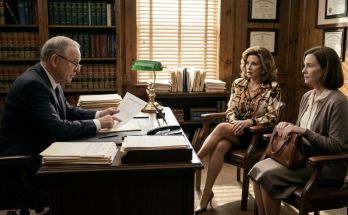
Brooke’s living room
is where my son
learned I’d lied
about paying for his rehab.
I watched Brooke
close the red shoebox
and hold it against her chest.
Kevin kept asking
what was inside.
I could have answered him.
I’d had eighteen years to practice.
Instead, I held my coffee cup and let my daughter-in-law take the box upstairs.
I know what that makes me look like. I’m not asking anyone to call it kindness. I had a reason for the lie, and it wasn’t a good enough one.
Kevin, I’m writing this as if I could still explain it to you without making it worse.
That box was sitting on my bedroom floor on December 10, the day you called to invite me to Christmas.
You said Brooke wanted to know if I could bring something worth bringing this year. Not another sweater. Her parents would be there, and you said it was embarrassing when I showed up with yarn.
I said, “All right, honey.”
I didn’t argue. I didn’t tell you how long a sweater takes when your fingers ache in cold weather. I hung up and went straight to the closet.
I had a little knitting basket beside my chair. I’d been working on mittens for the grandkids, but I put them away. I didn’t want another gift of mine getting that soft “Oh, how sweet” before disappearing into some drawer.
The shoebox was on the top shelf, behind the old Christmas tins. It had belonged to your father, Walt. He kept his good shoes in it back in 1998, and after he died in 2015, I used it for papers I couldn’t bring myself to throw out.
I hadn’t opened it in eleven years.
I took it down and sat on my bed. The paper inside was old, but I knew what it was. I tied one ribbon around the box, then left it by the door.
At the time, I told myself I was bringing the truth.
That wasn’t quite true either.
I was angry. I wanted you to see that your life had not been built by you alone. I wanted Brooke to see it too. I wanted the people at that table, especially her parents, to know I wasn’t just an old woman who brought yarn.
I wanted to put the box down and make you feel small.
I know that.
Before I tell you what was inside, I have to go back to the winter you were twenty-nine.
You were working at the parts counter at the mine supply store then. You’d moved back into my two-bedroom apartment because your marriage had ended, and I told myself it was just for a little while.
You were never mean to me. That’s one reason I kept making excuses. You were still my boy in a lot of ways. You’d bring in groceries without being asked, and you’d fix the loose cabinet hinge while the kettle boiled.
But you were drinking more than anyone knew. Then came the pills.
I found out about them because I washed your work shirts. One fell out of the pocket and landed by the washer. I remember the little plastic snap on the pocket because it had come loose, and I’d sewn it back twice.
You told me it was for a back injury.
I believed you for a week.
When I asked again, you said, “I’m handling it, Mom.”
So I stopped asking. I didn’t want the answer.
That’s the part I’m ashamed of before any of the rest. I knew enough to be scared, and I chose the kind of quiet that let me sleep.
You were fired in February. You told me they were cutting staff. I heard later from your friend Cal that you’d stopped showing up on time and had asked him for money. I didn’t ask you about that either.
I was afraid if I pushed, you’d leave. I was more afraid you’d stay and keep doing what you were doing.
My sister Ruth said I needed to call a doctor. I snapped at her that I didn’t need a lecture. She said, “You need help, Carol.”
I told her I was fine.
I was not fine. But I knew how to make soup and fold towels and keep my mouth shut. That felt like doing something.
One night in March, I heard you in the bathroom and found you sitting on the floor with your back against the tub. I don’t remember every detail. I remember the towel under your cheek and that one shoe was still on.
I called for help.
You woke up in the hospital and asked me not to tell anyone.
I said, “I won’t.”
That was the first promise I made that I had no right to make.
The hospital social worker gave me a list of places that could help. One program in Huntington had a bed open. It cost more than I had. I had a little money from Walt’s insurance, but most of it had gone to rent, bills, and the years when you needed help and didn’t ask for it.
I called the program anyway.
I didn’t have a plan. I just needed to hear a person say there was a place for you.
The woman on the phone said they’d hold the bed for two days if I could pay the first amount.
I hung up and sat at the kitchen table with my hands around a mug. I don’t even know why I remember that the mug had a chip on the handle. I was looking at that chip like it might tell me what to do.
Then I called Diane.
Brooke’s mother had met me twice by then. She was polite, but we weren’t close. I’d told her you were having a hard time. I hadn’t told her the whole truth.
I asked if she could lend me money.
She said, “How much?”
I gave her the number from the program. $6,840 for the first part.
There was a pause. Then she said, “I’ll bring it over.”
I should have asked why. I should have asked what she wanted in return. I should have said no, or told you the truth before taking a dollar.
Instead, I said, “Thank you.”
Diane came to my apartment the next afternoon with a bank check. She didn’t stay for coffee. She put it on the table and made me promise one thing.
“Don’t tell Brooke,” she said.
I asked why.
“Brooke thinks she can fix people. She can’t. And Kevin shouldn’t have to feel like he owes her family.”
I didn’t understand that then. Or maybe I understood enough and decided not to look too hard.
The money got you into the program. You stayed there five weeks. You called me every night at 8:15, and I kept a little calendar by the phone so I wouldn’t miss a call.
You told me you were sorry. You told me you were going to get steady. I listened.
When you came home, you said, “I’m going to make this right, Mom.”
I said, “You just get well.”
You asked where the money came from. I told you I’d used what Walt left me.
I wish I could say I planned that lie carefully. I didn’t. It came out because you looked ashamed, and I wanted to take the shame away from you.
Then I let it stand.
For a while, the lie felt like a kindness. You got a job. You started fixing things around my apartment again. You called every Sunday. When you met Brooke, you seemed lighter, and I was so grateful that I didn’t care who got credit for helping you get there.
I never told you Diane paid.
I didn’t tell Brooke either. She probably would have thanked her mother. Maybe she would have told you. Maybe you would have been mad at me for taking the money.
I was scared of that last part.
I told myself it was better for you not to know. I also liked hearing you say you’d never forget what I did for you. That’s the part I can’t dress up.
I liked being the one who saved you.
After you and Brooke married, she started bringing me to Christmas. I tried to make a place for myself there. I’d knit a scarf or a sweater, something soft enough for her to use in the car or around the house.
The first year, she smiled and said, “Oh, how sweet.”
I saw it again in a drawer months later when I was looking for a tea towel. It still had the tag I’d sewn inside. I didn’t say anything.
The next year, I made her a gray scarf. She said it was lovely and put it on a chair. I’m not saying she had to wear it. I know a handmade gift can be a burden if it isn’t your taste.
But every year I tried again.
I’d see the yarn at the store, feel it between my fingers, and imagine her wearing it. Then she’d open it, say something nice, and it would vanish. I made too much of that. I did. I made every sweater into proof that I belonged there.
You never told me to stop. You also never noticed.
After a while, I started to think Brooke was looking down on me. She had a nice kitchen, a big house, and parents who gave generous gifts. I decided she saw me as the poor mother who couldn’t keep up.
I never asked her if that was true.
I just let the idea get comfortable.
I know it’s easy to say I felt small. That doesn’t excuse the way I used the box.
Christmas came. Fourteen people were there, including Diane and her husband, Earl. They had the seats at the head of the table. The living room was full of presents, and I brought the red shoebox under my arm.
You saw it from across the room.
“Mom. A shoebox? Really?”
“It’s what I brought.”
You laughed. “Great. Used shoes. Perfect. Brooke, Mom brought us used shoes.”
Diane gave me a thin little smile and said, “Well, bless her heart.”
I felt my face get hot. I set the box on the coffee table and sat down.
I could have left it closed. I could have taken it home. I could have told you quietly what it held.
I didn’t.
After dinner, Brooke’s parents gave you both a vacation. Your brother bought you a grill. People clapped. The gifts were nice. I’m not pretending they weren’t.
Then Brooke picked up my box.
“And this is from Carol,” she said.
She pulled the ribbon loose. She opened the lid.
At first she looked amused. Then she stopped.
I watched her eyes move over the folded papers. She lifted one sheet, read it, and lowered it. Her hand went to the letter underneath.
Then she looked at Diane.
“Mom,” she said.
Diane got up from her chair.
You were still standing by the tree. “What’s in it?”
Brooke closed the lid and held the box against her chest.
“Kevin. We’re going home.”
“What? We are home. Brooke, what’s in it?”
She didn’t answer you. She started up the stairs. Diane followed her. I heard one door close upstairs.
You looked at me.
“Mom. What did you put in that box?”
I lifted my coffee cup. My hand was steady, which still bothers me.
“Something worth bringing, honey. Like you asked.”
You stared at me. I could hear somebody set down a fork. The Christmas music kept playing.
For about ten minutes, no one moved. Then you came back to my chair.
“You said you paid for rehab,” you said.
I didn’t answer.
“You told me that was your money.”
“I know.”
“Was that a lie?”
I set the cup down. “Yes.”
You rubbed your forehead. You weren’t shouting. I wish you had been. It would have been easier.
“How long have you known?”
“Since the day Diane gave me the check.”
“So you let me think you did it.”
“Yes.”
You sat down across from me. “Why?”
I could have said I was protecting you. I could have said Diane asked me to keep it quiet. Both things were true, in a way. Neither was the whole truth.
“I wanted you to think I’d saved you,” I said.
You looked at the box on the stairs. “You wanted me to owe you.”
“I didn’t think of it that way.”
“But you liked it.”
I said nothing.
You knew me well enough to hear the answer in that.
An hour later, Diane came back downstairs alone. She had red eyes, though she’d stopped crying by then. She said Brooke wanted to leave, and they were going to stay at her parents’ house for the night.
You stood up. “You paid for it?”
Diane looked at me first.
Then she looked at you. “Yes.”
“Why didn’t you tell me?”
“Carol asked me not to.”
I said, “You asked me not to tell Brooke.”
“I did,” Diane said. “I didn’t think it would stay hidden forever.”
She took the box from the stair rail. She didn’t look at me.
“You should’ve told him,” she said.
I wanted to tell her she’d asked me to keep the secret. I wanted to say she couldn’t put it all on me after eighteen years. I had the words ready.
I didn’t say them.
Diane went back upstairs. She and Brooke left soon after. You stayed at the table, staring at the empty space where the box had been.
The next day, I called you. You didn’t answer.
I called Brooke once. She answered, but neither of us knew what to say, soI told her I was sorry. She said she couldn’t talk yet, then hung up.
Kevin called three days later. He asked if I’d kept every paper from that time. I said I had. He said he and Brooke had read the letter too. Diane had written that she paid because Brooke was the one who found him that night, and she’d begged her mother not to let him die. Brooke had kept that from me all these years.
“I thought you knew,” Kevin said.
I didn’t. He didn’t say he forgave me. I didn’t ask him to. The red shoebox is back in my closet, but I can’t put it behind the Christmas tins anymore.