*Part 1 of 5*
After my daughter passed away,
I sold my home and moved
in with her husband to
help raise their three
little children.
When he married
someone else,
he told me the money I’d
contributed toward his
house was simply rent.
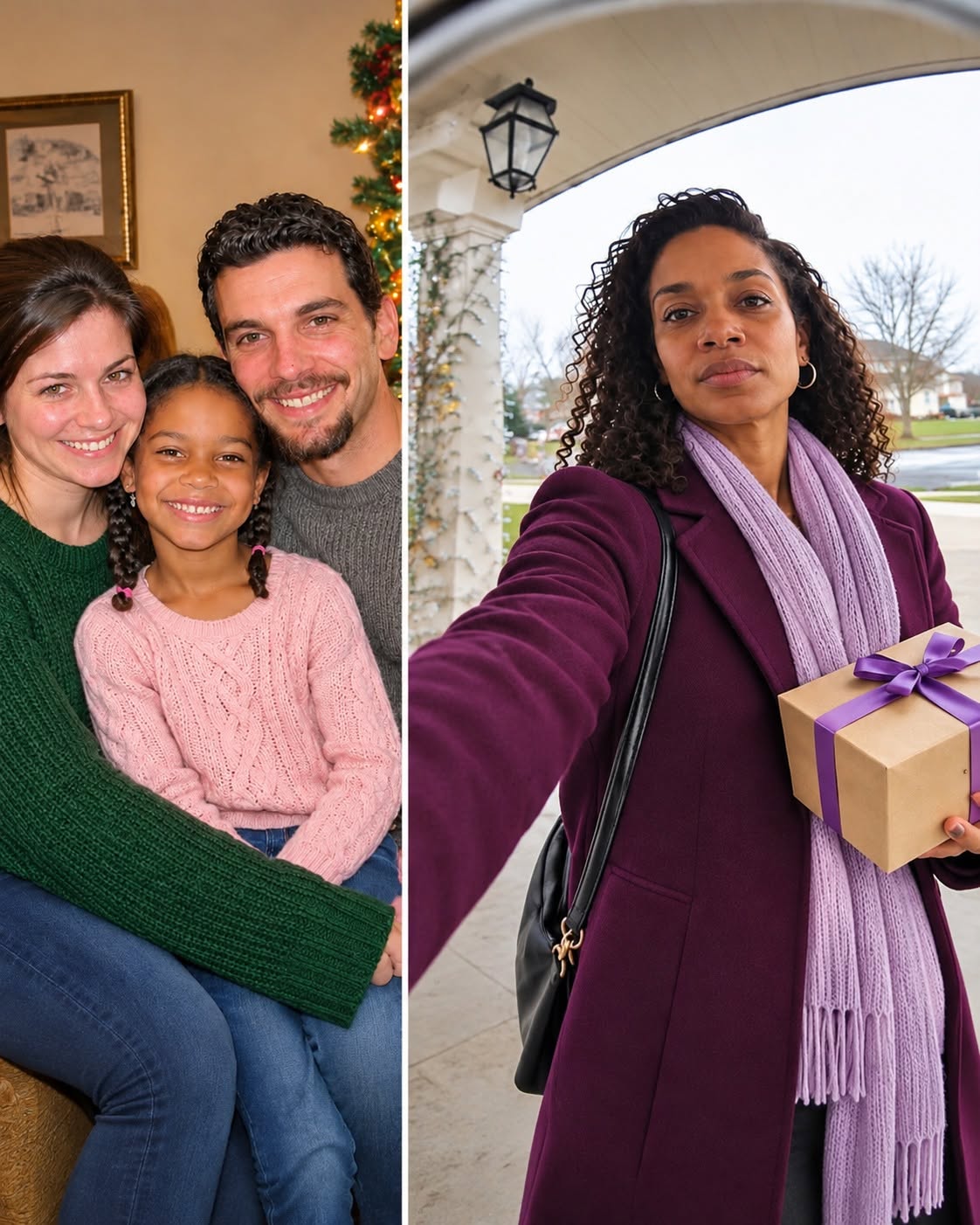
So I moved into a tiny apartment near a bus stop. Now, every afternoon at 3:40, three familiar faces appear on my porch. But one October afternoon, my oldest granddaughter brought something from her new stepmother that left me speechless.**
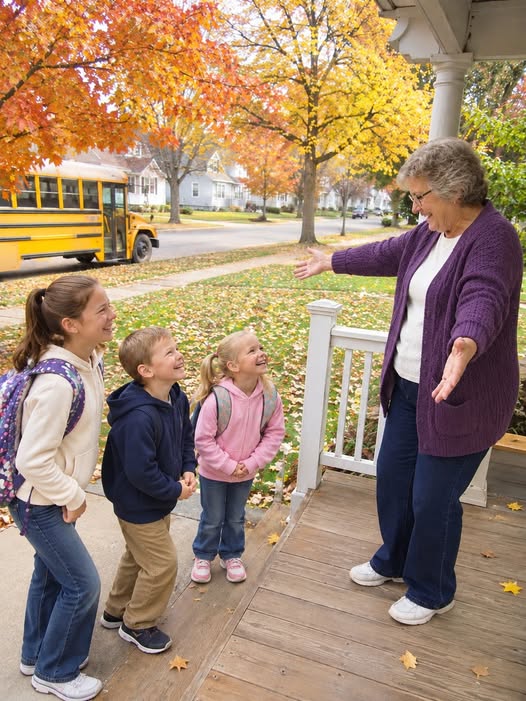
The school bus comes to a noisy stop at the corner of Third Street.
Lily steps off first.
Owen follows, wearing his favorite baseball cap.
Then comes little Gracie, her blonde pigtails bouncing above a bright pink backpack.
I’m always waiting on the porch in my red cardigan, ready to welcome them with open arms.
Three years ago, I lost my daughter, Kelsey, to a brain aneurysm.
She was only thirty-one.
She left behind three young children and a husband who barely knew how to continue without her.
I was fifty-seven then, working as a rural mail carrier.
I’d delivered mail along the same route for twenty-six years.
But when Kelsey died, everything changed.
I retired earlier than planned.
Sold my modest house for $90,000.
And moved into the spare bedroom of my son-in-law Nick’s home.
I immediately used $52,000 from the sale to reduce his mortgage.
I wanted my grandchildren to remain in the house where they’d grown up with their mother.
The remaining money gradually disappeared into everyday necessities.
Groceries.
Winter coats.
School photographs.
Dental appointments.
There were no written agreements.
No contracts.
I never imagined I’d need them.
We were family.
And taking my daughter’s widower to court would have risked losing the three children who were my last living connection to Kelsey.
So I focused on caring for them.
I prepared their school lunches.
Stayed awake with Owen when he suffered from croup.
Memorized every song little Gracie wanted me to sing.
Nick worked extra shifts.
Sometimes, late at night, I heard him crying alone in the garage.
I understood his grief.
I never blamed him for struggling.
Then, last winter, he met Ashley.
She was thirty, worked as a dental receptionist, and had a gentle manner.
The children seemed comfortable around her.
I liked her, too.
They married in June.
Two weeks after the wedding, Nick asked me to sit with him at the kitchen table.
“Roxanne, I think you should start looking for somewhere else to live.”
I listened quietly.
Then I asked what would happen to the money I’d put into his mortgage.
He stared at the table.
“That money covered your rent. You lived here for almost three years.”
Rent.
That’s what he called it.
Three years of helping raise his children.
Three years of sacrificing my retirement and spending the proceeds from my house.
I didn’t argue with him.
And I waited until I was alone before allowing myself to cry.
I don’t believe Nick was naturally unkind.
He’d lost his wife and wanted to begin another chapter.
He wanted the children to accept Ashley as their new mother.
And perhaps having me around reminded everyone too much of Kelsey.
So I found a small rental on Third Street.
It cost $650 a month.
I chose that particular place for one simple reason.
The school bus stopped just down the street.
Nick and Ashley both worked until after five.
Someone needed to look after the children when school ended.
I offered to have them come to my place.
Nick completed the bus paperwork the following week.
Since then, every school afternoon at 3:40, my grandchildren have climbed my porch steps.
We sit together at the kitchen table while they finish their homework.
I prepare apple slices with peanut butter.
We talk about school and whatever happened that day.
At 5:45, Nick arrives to collect them.
He never comes inside.
Ashley has never picked them up herself.
I assumed Nick had told her his own version of why I’d moved out.
Then came an October afternoon when the maple trees along Third Street had turned brilliant orange.
The bus stopped at the corner.
The children climbed down.
But Lily didn’t rush into my arms as usual.
Instead, she paused on the top porch step and removed her backpack.
“Grandma, Ashley gave me something for you.”
Behind her, Owen and Gracie became unusually quiet.
Lily opened the small front pocket of her bag.
“She told me to give it to you before we started anything else.”
I watched as she reached inside.
Then she looked up at me.
“Ashley said you’d understand what it means.”
What Lily pulled out wasn’t a letter.
At least, not at first.
It was a folded photocopy.
I recognized the heading immediately.
**COUNTY HOME & TRUST — MORTGAGE PRINCIPAL PAYMENT CONFIRMATION**
My fingers tightened around the paper.
Halfway down the page was a date from almost three years earlier.
Two months after Kelsey died.
And beneath it:
**Principal Payment: $52,000.00**
My name appeared beside the words **Source of Funds**.
I read the page twice.
Then a third time.
“Grandma?” Lily asked.
I folded it quickly.
“It’s all right, sweetheart.”
Owen was watching me.
He had Kelsey’s way of watching people—not staring exactly, but noticing.
“Are you mad?”
“No.”
That was the truth.
What I felt wasn’t anger.
Not yet.
It was something stranger.
The sensation of discovering that a door you had been told was a wall had actually been a door all along.
“There’s something else,” Lily said.
She reached into the pocket again.
This time she handed me a small white envelope.
Ashley had written my name across the front.
**Roxanne.**
“Did Ashley tell you what’s in this?”
Lily shook her head.
“She said grown-up stuff.”
That sounded like Ashley.
I managed a smile.
“Well, grown-up stuff can wait ten minutes. Shoes off. Hands washed. Who wants apples?”
“Me!” Gracie shouted.
The solemn spell broke.
She raced inside.
Owen followed.
Lily lingered.
“Grandma?”
“Yes?”
“Are you and Dad fighting?”
The question landed more sharply than anything in Ashley’s envelope could have.
I crouched so we were eye level.
“Your dad and I have had some disagreements.”
“Because you don’t live with us anymore?”
I hesitated.
Children notice hesitation more than adults do.
“Some of it,” I admitted.
Her mouth tightened.
“But there is nothing you did that caused it. Nothing Owen did. Nothing Gracie did.”
“Did Ashley?”
“No.”
That answer came easily.
Lily studied me a moment longer, then nodded and went inside.
I remained on the porch.
Across Third Street, wind lifted a scatter of leaves into a swirling column.
For months, I’d told myself I was protecting the children by never discussing what had happened.
Maybe I had been.
Or maybe silence had simply left them free to invent explanations of their own.
I slipped Ashley’s envelope into my cardigan pocket.
We went through our normal routine.
Gracie colored a horse purple because, according to her, “brown horses are boring.”
Owen complained that division had been invented by “someone who hated children.”
Lily worked on a book report.
I made cocoa because the afternoon had turned chilly.
But the envelope seemed to grow heavier against my side with every passing minute.
At 4:22, Owen looked up from his math worksheet.
“Grandma?”
“Yes?”
“If a train leaves Cleveland going sixty miles an hour—”
“I already dislike this train.”
He grinned.
For the first time that afternoon, I laughed.
That was what these hours had become to me.
Not babysitting.
Not repayment.
Not obligation.
Life.
Ordinary, priceless life.
At 5:43, headlights appeared outside.
Nick’s truck.
He pulled along the curb.
Usually I helped Gracie with her coat while Lily and Owen packed their bags.
That evening, Lily moved more slowly.
At the doorway she hugged me tighter than usual.
Nick remained in the truck.
I watched them cross the sidewalk.
Owen climbed into the rear seat.
Gracie waved through the window.
Lily stopped beside the passenger door.
Then she turned back toward me.
For one strange second, Nick and I looked directly at each other through the windshield.
His face changed.
Perhaps he saw the folded mortgage statement in my hand.
Perhaps he only saw something in my expression.
Either way, he looked away first.
The truck pulled off.
I waited until the taillights disappeared.
Then I went inside.
The apartment seemed painfully quiet after the children left.
It was a one-bedroom unit on the second floor of a converted house. The kitchen floor tilted slightly near the refrigerator, the radiator clanked whenever the heat came on, and the bathroom door had to be lifted before it would latch.
But it was mine.
My red cardigan hung on my chair.
Kelsey’s photograph stood beside a little ceramic pumpkin Gracie had painted at school.
My own name was on the lease.
There was peace in that.
There was loneliness, too.
I sat at the kitchen table.
For almost five minutes, I simply looked at Ashley’s envelope.
Then I opened it.
Inside was a handwritten note.
*Roxanne,*
*I found the mortgage paper while I was looking for the warranty on the furnace.*
*Nick told me you decided to move out because you wanted more independence.*
*He never told me he asked you to leave.*
I stopped reading.
The radiator clanged.
Somewhere downstairs, a television audience applauded.
I kept going.
*He also never told me you gave him $52,000.*
*Two nights ago, I asked him about it. He said it was complicated.*
*Maybe it is.*
*But I know what rent looks like, and I know what a principal mortgage payment looks like.*
*They aren’t the same thing.*
My throat tightened.
Ashley continued.
*I’m not sending this because I want to interfere between you and Nick. I’m sending it because I think you deserve to know that I know.*
*And because I found something else.*
There was a second sheet in the envelope.
Not a photocopy.
An old piece of stationery folded in half.
I knew it before I touched it.
Yellow flowers along the bottom.
Kelsey had bought a box of that stationery when Lily was a baby.
She used to send handwritten thank-you notes because she said texts made gratitude look lazy.
My daughter’s handwriting covered the front.
But it wasn’t addressed to me.
It said:
**Nick — please keep this somewhere safe. Someday Mom may need to see it.**
I couldn’t breathe for several seconds.
I opened it.
The date was five months before Kelsey died.
*Nick,*
*I know you think I worry too much.*
*Maybe I do.*
*But after the headaches this week, I keep thinking about all the things people leave unsaid because they’re sure there will always be another Tuesday.*
My hand began trembling.
Kelsey had complained about headaches.
I’d forgotten.
Not severe ones.
Not the sort that made us think something was terribly wrong.
Just headaches.
She’d blamed fluorescent lights at work.
The letter continued.
*If anything ever happens to me, promise me one thing.*
*Don’t let Mom become a visitor in the children’s lives.*
I covered my mouth.
For a moment, I was no longer sixty.
I was standing in a hospital corridor while a doctor spoke gently and Nick sat bent forward with his head in his hands.
I forced myself to continue.
*She will try to give you everything she has. That’s who she is.*
*Don’t let her do so much that she ends up with nothing.*
*And if she does help you financially, write it down. Make it fair. She’ll say family doesn’t need paperwork.*
*She’s wrong.*
A sound escaped me.
Half laugh.
Half sob.
Even from three years away, my daughter had managed to scold me.
I wiped my eyes.
At the bottom were four lines.
*Most of all, don’t make her feel that loving us gives her less right to have a life of her own.*
*She is my mother.*
*She is their grandmother.*
*Those are not temporary jobs.*
Beneath that, in different handwriting, someone had written:
**I promise. — Nick**
I stared at his name.
Nick had signed it.
Not as a contract.
Not before a lawyer.
Not as anything a courthouse might care about.
But he had promised my daughter.
Ashley had added one final line to her note.
*There’s more, Roxanne.*
*I didn’t send the other thing with Lily.*
*I couldn’t.*
*Please meet me tomorrow at two.*
*And please don’t tell Nick yet.*
I remained at the table until darkness filled the windows.
At 7:11, my phone rang.
Nick.
I watched his name flash.
Once.
Twice.
Three times.
I answered.
“Hello?”
His voice sounded careful.
“Did Lily give you something today?”
“Yes.”
Silence.
“What did Ashley send?”
I looked at Kelsey’s handwriting.
“You should ask your wife.”
Another silence.
Longer this time.
“Roxanne.”
“Yes?”
“If she asks to meet you—”
“She already did.”
He breathed out.
I heard a car horn somewhere on his end.
Then his voice dropped.
“You don’t know everything.”
“I’ve begun to suspect that.”
“Please.”
It was the first time since he’d asked me to move out that I heard something in his voice other than discomfort.
Fear.
Not fear of me.
Fear of whatever Ashley had found.
“What is it, Nick?”
He didn’t answer immediately.
When he finally did, his words were so quiet I almost missed them.
“Before Kelsey died, she gave me something else.”
My heartbeat slowed.
“What?”
“I thought I’d lost it.”
“And Ashley found it?”
“Yes.”
“What is it?”
Nick swallowed audibly.
“A letter.”
I looked at the one already lying before me.
“There was another?”
“No,” he whispered. “Not from Kelsey.”
I stood without meaning to.
“Then from whom?”
Nick didn’t answer.
He ended the call.
I remained beside my kitchen table, the phone still pressed to my ear.
Outside, wind pushed orange leaves along Third Street.
And for the first time since my daughter died, I realized there might be something Kelsey had been trying to tell me before we lost her.
Something neither Nick nor I had ever found the courage to face.
**-END OF Chapter 1–**
*Part 2 of 5*
Ashley arrived at 1:56 the following afternoon.
I knew because I’d been watching the clock since noon.
She didn’t bring Nick.
She brought a bakery box.
That somehow made the whole thing harder.
People planning terrible revelations should not arrive carrying cinnamon rolls.
When I opened the door, she stood beneath the porch awning in a navy coat, holding the box with both hands.
“Hi.”
“Hello, Ashley.”
“I wasn’t sure if you’d eaten.”
“I have.”
“Oh.”
“But I can usually be persuaded to eat twice.”
A nervous smile appeared.
“Good.”
I stepped aside.
She had been inside my apartment only once, briefly, when Gracie forgot a mitten.
That afternoon Ashley looked around as if seeing the place for the first time.
Her gaze rested on the uneven kitchen floor, the narrow hallway, the small table where three children’s homework folders were stacked.
Then it settled on Kelsey’s photograph.
“I’ve always liked that picture,” she said.
It showed Kelsey at twenty-eight, laughing into the wind at a county fair.
“You’ve seen it before?”
“Nick has a copy.”
I put water on for coffee.
Ashley sat.
For a while neither of us mentioned the envelope.
Finally I said, “Nick called me.”
She closed her eyes.
“I thought he might.”
“He said you found another letter.”
“I did.”
“From whom?”
Instead of answering, Ashley reached into her purse.
The envelope she placed on the table was old.
Older than Kelsey’s stationery.
My name was written across it.
**Roxanne.**
I recognized the handwriting.
The room seemed to tilt.
“My husband wrote that.”
Ashley looked surprised.
“Kelsey’s father?”
I nodded.
“Daniel.”
Daniel had been gone for nineteen years.
Cancer.
I had been forty-one when I buried him.
Kelsey had been fifteen.
“Why would Kelsey have a letter from my husband?”
“I don’t know.”
“You didn’t open it?”
“No.”
“Nick?”
“I don’t think so.”
I stared at the envelope.
The seal was intact.
There are losses that soften around the edges with time.
You stop expecting to hear keys in the front door.
You stop turning when someone laughs like them in a grocery store.
Eventually you can say their name without feeling the room change.
Then one day their handwriting appears on a kitchen table.
And nineteen years vanish.
“Where was it?”
“In a metal recipe box.”
“Kelsey’s?”
Ashley nodded.
“At the back of the pantry. I was clearing the high shelf because we had pantry moths.”
Despite everything, I blinked.
“Pantry moths?”
“I know.”
A tiny laugh escaped both of us.
And suddenly I understood something.
Ashley was frightened too.
Not of the letter.
Of me.
Of what I might think of her.
I sat opposite her.
“Why did you send the mortgage statement?”
Her gaze fell.
“Because when I found it, I asked Nick why your name was on it.”
“What did he tell you?”
“That you’d helped after Kelsey died.”
“And?”
“That you’d lived there for three years, so he considered things even.”
“Even.”
“I didn’t.”
She looked at me.
“I still don’t.”
I waited.
Ashley folded her hands.
“Roxanne, I never asked him to make you move.”
“I know.”
“He told me you were thinking about it already.”
My chest tightened.
“I wasn’t.”
“I know that now.”
She stared at the coffee mug.
“When we started dating, he talked about you like you were holding the family together. He said he couldn’t have survived those first two years without you.”
That hurt more than I expected.
“Then why did he change?”
Ashley was quiet.
“I think he became embarrassed.”
“Of me?”
“No. Of needing you.”
I hadn’t considered that.
“He loves his kids,” Ashley said. “But he spent years feeling as though every stable thing in their lives was something you provided. Breakfast. Homework. Doctor appointments. Birthdays. When we got serious, he kept saying he needed to become their father again.”
“He was always their father.”
“I told him that.”
Outside, a truck passed.
Ashley continued.
“I think he convinced himself that independence required distance.”
“And my money?”
Her expression hardened slightly.
“That part I can’t explain for him.”
Neither could I.
I touched Daniel’s unopened envelope.
“Does Nick know you brought this?”
“Yes.”
“He sounded frightened last night.”
“I think he’s ashamed.”
“Those aren’t the same thing.”
“No.”
It was the first time I’d heard Ashley disagree with him without apologizing afterward.
I picked up the envelope.
The paper had yellowed around the edges.
My name looked exactly as Daniel used to write it on grocery lists.
Large R.
Small, crowded letters after.
I opened it carefully.
Inside were two pages.
*Rox,*
*If you’re reading this, somebody finally cleaned out Kelsey’s recipe box better than we ever managed to.*
My breath caught.
Ashley leaned forward.
I laughed through sudden tears.
“That sounds like him.”
I continued.
*She’s fifteen right now and furious with both of us because we won’t let her go to a concert in St. Louis with a boy named Tyler who owns a car held together by rust and optimism.*
I could see it.
Kelsey stomping upstairs.
Daniel whispering, *We are absolutely not letting her go.*
Then the letter changed.
*The doctor says I should write down anything important while I’m still feeling like myself.*
I stopped.
I remembered those months too well.
Chemotherapy.
Hospital corridors.
Daniel losing weight while pretending everything tasted normal.
*There is something I never told you.*
I stared at the sentence.
Below it:
*Years ago, before Kelsey was born, I received a letter from someone you knew when you were young.*
The next line made my hands go cold.
*Her name was Marianne.*
I had not spoken that name aloud in more than thirty years.
Ashley noticed.
“You know who that is.”
“Yes.”
Marianne Cole had been my closest friend growing up.
Closer than a sister for a while.
We had shared school lunches, bicycles, secrets, college applications.
Then, when I was twenty-two, we had an argument.
Not a dramatic one.
No screaming.
No betrayal worth writing novels about.
Something smaller.
Which, somehow, made the separation worse.
She moved away.
I married Daniel.
Kelsey was born.
Life accelerated.
Marianne and I never reconciled.
I kept reading.
*She asked me not to give you her letter right away. She said she was afraid she’d disrupt your new marriage and that she’d write again when she was braver.*
*She never did.*
I looked at Ashley.
“This isn’t possible.”
But it was Daniel’s handwriting.
*I kept her letter.*
*Years later, when I got sick, I gave it to Kelsey.*
*I told her she could decide whether to give it to you someday.*
*Maybe that was cowardly.*
*Probably it was.*
*I’m sorry.*
Below that:
*The important thing is this: Marianne wasn’t writing to ask forgiveness.*
*She was writing to give you information.*
I turned the page.
Only three lines remained.
*Something happened during the summer before you met me.*
*Something involving your father.*
*Kelsey knows where Marianne’s original letter is.*
*Ask her.*
I closed my eyes.
Ashley whispered, “Roxanne?”
Kelsey was gone.
Daniel was gone.
And somewhere along the way, two people I loved had carried a secret that belonged to me.
I wasn’t angry.
Not yet.
Mostly I felt tired.
There are moments when grief stops feeling like sadness and begins to resemble archaeology.
You brush away one layer and discover another beneath it.
Ashley touched the bakery box.
“I found one more thing in the recipe tin.”
She slid a photograph toward me.
Two young women stood beside a lake.
One was me.
Twenty years old.
Long brown hair.
Sunburned shoulders.
The other was Marianne.
On the back, Kelsey had written:
**Grandma + Marianne. Lake Briar, 1983. Ask Grandma when she’s ready.**
I stared at those words.
“When she’s ready.”
Ashley nodded.
“Apparently Kelsey knew something.”
I didn’t answer.
For years, I’d believed my daughter had died leaving only memories behind.
Now she seemed to be reaching into my life from rooms I’d forgotten existed.
Ashley poured the coffee I’d neglected.
“I need to tell you something else.”
I almost laughed.
“I’m beginning to dislike that sentence.”
“I understand.”
She held the mug between her hands.
“Lily heard Nick and me arguing.”
My attention sharpened.
“About me?”
“Yes.”
“What did she hear?”
“Enough.”
Ashley swallowed.
“She asked me whether you had to move because I came.”
My heart sank.
“What did you tell her?”
“That adults sometimes make decisions badly, and that none of it was her fault.”
“Good.”
“She asked if it was my fault.”
I looked at Ashley.
“And?”
“I told her no. But I also told her I should have asked more questions.”
There was no defensiveness in her voice.
Only regret.
I reached across the table.
It surprised both of us when I covered her hand with mine.
“You didn’t know.”
“No.”
“Then don’t claim guilt just because someone left it unattended.”
Her eyes became wet.
She nodded.
For the next hour, we talked.
Not as Nick’s mother-in-law and Nick’s new wife.
As two women who loved the same children from very different places.
Ashley told me she never wanted Gracie to call her Mom unless Gracie chose to someday.
She told me she worried Lily believed liking her meant betraying Kelsey.
She admitted she kept one photograph of Kelsey in the hallway even though Nick had taken several down after the wedding.
“Why?”
“Because children shouldn’t have to hide one love to make room for another.”
I looked at her for a long time.
“Kelsey would have liked you.”
Ashley blinked rapidly.
“That may be the nicest thing anyone has ever said to me.”
At 3:25, we walked together to the bus stop.
When the children climbed off, Gracie froze.
“Ashley?”
“Surprise.”
Gracie ran toward her.
Lily looked from Ashley to me.
Something eased in her expression.
Owen said, “Can we still have snacks?”
“Tragedy narrowly avoided,” I said.
Back at the apartment, Ashley stayed.
For the first time, five chairs crowded around my little kitchen table.
Lily read while Gracie colored.
Owen battled fractions.
Ashley cut apples.
And I found myself wondering whether families sometimes healed not by returning to what they had been, but by becoming something nobody had planned.
Then Lily reached into her homework folder.
“Grandma?”
“Yes?”
“I forgot this yesterday.”
She handed me a sheet of lined paper.
At the top was her name.
**Lily Morgan — Personal Narrative Assignment**
The teacher had written a gold star.
I smiled.
“Do you want me to read it?”
Lily hesitated.
Then nodded.
The title was:
**The People Who Leave**
I read the first paragraph.
Then the second.
By the third, my smile disappeared.
Lily had written about losing her mother.
About Ashley arriving.
About my red cardigan.
And about the night, months earlier, when she had heard her father speaking on the telephone.
The final paragraph read:
*My grandma moved because Dad said we needed to become a real family again.*
*I don’t know what we were before.*
*Sometimes I think Grandma left because we weren’t enough reason for her to stay.*
I could no longer see the page clearly.
Ashley covered her mouth.
Lily sat very still.
“Is that true?” she whispered.
I looked at my granddaughter.
And in that instant, the mystery of Daniel’s letter, Marianne, and even the $52,000 receded.
There was a more urgent truth waiting at my kitchen table.
A child I loved believed I had chosen to leave her.
“No,” I said.
My voice broke.
“No, Lily.”
She stared at me.
“Then why did you?”
Before I could answer, a knock sounded at the door.
Nick stood on the porch.
He had come forty minutes early.
And from the expression on his face, I knew he had heard enough through the thin apartment door to understand exactly which question his daughter had just asked.
**-END OF Chapter 2–**
*Part 3 of 5*
Nick didn’t come inside immediately.
He stood on my porch with one hand resting against the doorframe.
Lily looked at him.
“Dad?”
He had spent three years protecting his children from hard truths.
So had I.
Maybe that was how we had arrived here.
Not through cruelty.
Through protection piled upon protection until nobody knew what was real anymore.
Nick stepped inside.
“Can we talk?”
Lily held her essay against her chest.
“About Grandma leaving?”
He closed his eyes briefly.
“Yes.”
Ashley looked at him.
There was an entire conversation in the look they exchanged.
Then Nick pulled out a chair.
He didn’t sit at the head of the table.
There was no head of my little table.
He sat beside Lily.
“First,” he said, “Grandma did not leave because of you.”
Lily glanced at me.
Nick continued.
“Grandma didn’t decide she didn’t want to live with us anymore.”
“Then who decided?”
Children have an uncomfortable talent for finding the question adults are hoping to avoid.
Nick rubbed his palms together.
“I asked Grandma to move.”
Lily stared at him.
Owen stopped pretending to do math.
Gracie’s purple crayon became motionless.
“Why?” Lily asked.
“I thought things needed to change.”
“Because Ashley came?”
Ashley began to speak.
Nick stopped her gently.
“No. This was my decision.”
I watched him.
For all my hurt, I was grateful he said it.
“I thought,” Nick continued, “that because I had gotten married again, I needed to prove I could take care of everything myself.”
“But Grandma took care of us.”
“Yes.”
“Because you couldn’t?”
Nick hesitated.
“Sometimes.”
Owen looked fascinated.
Children rarely hear adults admit inadequacy.
Nick leaned toward Lily.
“I made a mistake.”
Her chin trembled.
“Do grown-ups get to do that?”
“Unfortunately, yes.”
“Even dads?”
“Especially dads.”
That earned the smallest smile.
Then Lily asked, “Did Grandma do something bad?”
“No.”
“Did Ashley?”
“No.”
“Did Mom?”
Nick inhaled sharply.
“No.”
Lily nodded.
The world, for her, had been reduced to four possible culprits.
Perhaps that was how children made grief manageable.
Somebody must have caused the change.
Somebody must be responsible.
Nick looked at me.
“There was another part of my mistake.”
I knew what he meant.
Money.
I shook my head slightly.
Not in front of them.
He understood.
“It’s grown-up business,” he said.
Owen groaned.
“Everything interesting is grown-up business.”
I almost smiled.
“Sometimes grown-up business is extremely boring.”
“Then why do grown-ups argue about it?”
Nobody had an answer for that.
Ashley took the children into the living room.
Gracie chose a movie.
Owen brought his homework.
Lily lingered.
Before leaving the kitchen, she wrapped her arms around me.
“You didn’t want to go?”
“No.”
“But you’re okay here?”
I looked around.
“Yes.”
Both things could be true.
She seemed to understand that better than many adults would.
After the children settled, Nick remained at the table.
Ashley returned.
She stood beside him, but didn’t touch him.
Nick noticed Daniel’s letter.
“So you read it.”
“Yes.”
He looked toward the children.
“Can we talk somewhere else?”
“My bedroom is the only other room.”
“The porch?”
It was cold.
We went anyway.
The three of us sat beneath an orange dusk while traffic passed at the end of the street.
Nick began.
“I shouldn’t have said the money was rent.”
“No.”
“I knew that the minute I said it.”
“Then why say it?”
His jaw tightened.
“Because I didn’t know how to tell you I couldn’t repay it.”
I studied him.
“You could have said exactly that.”
“I know.”
“Instead you rewrote what happened.”
“I know.”
“You made generosity sound like a bill I owed you.”
He looked down.
“I know.”
That was all I had wanted for months.
Not groveling.
Not humiliation.
Acknowledgment.
It didn’t erase anything.
But truth gave pain a shape.
Ashley said quietly, “Tell her the rest.”
Nick nodded.
“When you moved in, I was drowning.”
I waited.
“Not financially. Not only financially.”
He rubbed his forehead.
“I’d wake up and forget Kelsey was dead for maybe two seconds. Then remember. Every morning.”
I knew that feeling.
“I couldn’t pack lunches. Couldn’t remember picture day. I once put Owen in the car for preschool on a Saturday.”
From inside came the sound of children laughing at the television.
“You saved us,” he said.
“I helped.”
“No. You saved us.”
His eyes met mine.
“And after a while I hated that I needed saving.”
There it was.
Not ingratitude alone.
Shame.
“I’d come home and see dinner done, homework done, baths done. The kids went to you when they had nightmares.”
“I was there.”
“I know.”
His voice cracked.
“But every day I started thinking Kelsey would look at me and ask why her mother had become more of a parent than I was.”
“Kelsey would never have said that.”
“I know that now.”
“Do you?”
He nodded slowly.
“When I met Ashley, I thought I finally had a chance to reset everything.”
Ashley frowned.
“I wasn’t a reset button.”
“I know.”
“You didn’t then.”
“No.”
He looked exhausted.
“I thought if Roxanne moved out, I would become necessary again.”
My anger softened around the edges.
Not vanished.
Softened.
“You were always necessary.”
He swallowed.
“I couldn’t see it.”
Then Ashley said, “And the money?”
Nick stared toward the street.
“I have about eleven thousand saved.”
I hadn’t expected that.
“I can give you that now. Then five hundred a month. More when I can.”
“You have three children.”
“I’m aware.”
“They cost money.”
“So did your house.”
I went quiet.
He continued.
“I don’t know how long it’ll take. We can put it in writing. Have someone review it.”
The irony was not lost on me.
Kelsey’s letter had told him exactly that three years earlier.
Write it down.
Make it fair.
“I don’t need you to bankrupt yourself.”
“I know.”
“But I do need you never to call it rent again.”
“I won’t.”
“And I won’t accept money the children need.”
“Fine.”
“We’ll figure out something realistic.”
Ashley breathed out.
Nick looked surprised.
“That’s it?”
“No.”
His face fell.
“We’re going to have to learn how to speak to each other again.”
“That sounds worse than money.”
“It may be.”
He almost laughed.
I almost did too.
Then I remembered Marianne.
“Why were you so frightened about Daniel’s letter?”
Nick’s expression changed.
“I wasn’t afraid of that one.”
Ashley turned toward him.
“What?”
“There was another thing in the box.”
Ashley frowned.
“I showed her everything I found.”
“No.”
Nick stood.
“When Kelsey and I first got married, she gave me an old voicemail recording.”
“Recording?”
“She transferred it from a cassette Daniel had.”
I stared.
“What recording?”
Nick shook his head.
“I never listened to all of it.”
“Why?”
“Because Kelsey told me it concerned you and her grandfather. She said if Daniel ever told you about Marianne, she wanted you to have it.”
“And you kept this?”
“I forgot about it.”
The words could have angered me.
Instead they sounded painfully believable.
His wife died.
His world collapsed.
An old recording concerning someone else’s past disappeared beneath a mountain of immediate grief.
“Where is it?”
“At home.”
Ashley looked sharply at him.
“You knew?”
“I found the USB drive last night after you went to bed.”
“What does it say?”
Nick looked at me.
“I listened to the first minute.”
“And?”
“It isn’t Marianne’s voice.”
Something moved through me.
“Whose?”
Nick hesitated.
“Your father’s.”
My father, Samuel, had died when Kelsey was four.
A quiet man.
A hardware store manager.
The sort of father who checked tire pressure every Sunday and always carried peppermint candy in his shirt pocket.
“What does he say?”
Nick’s answer was interrupted by the front door opening.
Lily came outside.
“Dad?”
He turned.
“The movie stopped.”
“Stopped?”
“Owen pressed something.”
From inside Owen yelled, “It asked if I was still watching!”
Nick sighed.
“I’ll fix it.”
He went inside.
Lily remained.
She sat beside me and rested her head on my shoulder.
“Ashley?”
“Yes?”
“Are you going to live at our house forever?”
Ashley seemed startled.
“I hope so.”
“And Grandma doesn’t?”
I answered.
“I live here.”
“Can people still be a family when they live in different houses?”
Ashley and I looked at each other.
“Yes,” we said together.
Lily considered this.
“Okay.”
Apparently that settled the matter.
By the time Nick collected the children that evening, something between us had shifted.
Not repaired.
Repair takes work.
But opened.
The next morning I met Nick at the credit union.
We spoke with someone about documenting repayment.
Nothing dramatic.
No lawyers pounding tables.
No accusations.
Just numbers, signatures, realistic monthly amounts, and an agreement that the children would never become collateral in an adult disagreement.
When we finished, Nick stood beside his truck.
“Roxanne?”
“Yes?”
“I’m sorry.”
This time I believed he understood what he was apologizing for.
“I know.”
“Does that mean you forgive me?”
“No.”
He blinked.
I smiled faintly.
“It means I heard you.”
He nodded.
Fair enough.
That afternoon the children arrived at 3:40.
Normal chaos resumed.
But at 5:20, before Nick came, Lily asked me to help with a family-history assignment.
She needed photographs.
Names.
Places people had lived.
“Can we use Mom’s things?”
“Of course.”
“I found a box in the attic.”
My hand paused.
“At your house?”
She nodded.
“Ashley said I could look.”
“What kind of box?”
“Mom’s memory box.”
Something tightened inside me.
“What’s in it?”
“Pictures. Birthday cards. Some letters.”
Then Lily lowered her voice.
“And something weird.”
Owen looked over.
“What?”
“Nothing.”
“You said weird.”
“Go away.”
“You go away.”
I intervened.
“What did you find, Lily?”
She opened her backpack.
Inside was a small blue notebook.
Kelsey’s handwriting filled the first page.
Not a diary.
A list.
**Things to ask Mom someday.**
Beneath it were ordinary questions.
*Why did Grandma Mae hate tomatoes?*
*Where did Dad learn to whistle?*
*What was Mom’s first job?*
Then, halfway down the page:
**Ask Mom why Grandpa Samuel sent Marianne away.**
I stopped breathing.
Sent her away?
That wasn’t what I remembered.
Marianne had chosen to leave.
Hadn’t she?
Lily tapped another line.
“Who’s Marianne?”
I closed the notebook.
“Someone I knew a long time ago.”
“Was she family?”
“No.”
But suddenly I wasn’t certain that was the whole answer.
That evening, at 6:13, Nick returned.
This time he came inside.
He placed a black USB drive on the table.
“I brought it.”
Ashley stood behind him.
The children were already home.
The apartment was quiet.
I put the drive into my old laptop.
One audio file appeared.
**SAMUEL — AUG 1983**
My hand hovered over the mouse.
Then I clicked.
Static filled the kitchen.
A chair scraped.
My father’s voice emerged from forty-three years ago.
“Daniel, if Roxanne ever hears this, tell her I did what I thought I had to do.”
I froze.
Another pause.
Then:
“Marianne was not the person I sent away.”
A shiver traveled through me.
My father continued.
“It was the boy.”
I stared at the screen.
There had been no boy.
At least, none I remembered.
Then Samuel said a name.
And every belief I had about that summer cracked open at once.
“His name was Thomas Cole.”
Marianne’s older brother.
The young man who had disappeared from our town in 1983.
And the last person anyone knew had seen him—
was me.
**-END OF Chapter 3–**
*Part 4 of 5*
For two days, I didn’t listen to the rest of the recording.
That surprised everyone.
Especially me.
I had spent months believing answers would make things easier.
But answers are not always doors.
Sometimes they are staircases descending into rooms you are no longer sure you wish to enter.
Thomas Cole.
I hadn’t thought seriously about him in forty years.
He had been twenty-three that summer.
Marianne was twenty-one.
I was twenty.
Thomas worked at a boat repair shop near Lake Briar.
He was tall, quiet, and forever fixing things without being asked.
Bicycles.
Radios.
Loose porch rails.
He had once repaired my father’s lawn mower and refused payment.
I remembered liking him.
Nothing more.
At least, that was what I told myself.
On Thursday evening, Ashley came to my apartment alone.
“Nick says you’re not listening to it.”
“Nick needs a hobby.”
Ashley smiled.
“He’s considering woodworking.”
“He’ll remove a finger.”
“That was also my concern.”
She sat.
The ease between us was new.
Not perfect.
But real.
“Do you want company?” she asked.
“For the recording?”
She nodded.
I looked at her.
“You don’t even know these people.”
“No.”
“Then why?”
“Because sometimes it’s easier to hear difficult things when somebody else is in the room.”
It was such a simple answer.
I opened the laptop.
We listened.
My father’s voice returned.
“Thomas came to see me because he had received an offer for work in Oregon. He wanted Roxanne to come with him.”
My hand went still.
Ashley glanced at me.
I said nothing.
Samuel continued.
“She didn’t know.”
I whispered, “I didn’t.”
Thomas had wanted me to leave with him?
I remembered the lake.
A July evening.
Thomas sitting beside me on the dock while Marianne swam.
He had asked if I ever thought of leaving town.
I’d laughed.
Said everyone thought about leaving.
He’d said, *I’m serious.*
I hadn’t understood.
The recording continued.
“I told him Roxanne was starting college. She had plans.”
Then my father’s voice weakened.
“I told him not to confuse her.”
I closed my eyes.
That sounded like Samuel.
Practical.
Protective.
Certain.
“I said things I regret.”
Static.
Then:
“Thomas left town three days later. Marianne believed Roxanne had rejected him.”
Ashley whispered, “Oh.”
I remembered Marianne’s anger.
*You could at least have told him yourself.*
That was what she had said during our final argument.
I’d assumed she meant I’d been unfriendly.
I hadn’t understood.
My father’s voice continued.
“Marianne confronted me. I made her promise not to tell Roxanne because I was afraid Roxanne would follow him.”
There was a long silence on the recording.
Then Samuel said:
“She shouldn’t have agreed.”
Another silence.
“And I shouldn’t have asked.”
I opened my eyes.
That was the secret.
Not crime.
Not scandal.
Not some unimaginable betrayal.
Just adults deciding they knew what another person needed.
Deciding silence was kindness.
The same mistake we had been making around Lily.
Around Owen.
Around Gracie.
Around each other.
My father’s voice softened.
“Thomas wrote Roxanne one letter. I returned it.”
I felt physically sick.
Ashley reached for my hand.
“I am sorry.”
Samuel’s final words were almost inaudible.
“If she ever learns about this, tell her I loved her. But don’t tell her love made what I did right.”
The recording ended.
For a long time, neither of us moved.
Then I laughed.
Ashley stared at me.
“What?”
“My family.”
Tears ran down my face.
“We’ve been deciding things for each other for generations.”
She squeezed my hand.
“That does appear to be a theme.”
I laughed harder.
Soon she did too.
There we sat—my daughter’s mother and my daughter’s husband’s second wife—crying and laughing over coffee while forty years of family silence finally ran out of places to hide.
That weekend, I drove to Lake Briar.
I hadn’t visited in years.
The old boat shop was gone.
The dock had been replaced.
May you like
Luxury cabins stood where pine trees once crowded the shore.
But the lake itself remained indifferent to memory.
I walked to the water.
I tried to imagine the life I might have lived had I received Thomas’s letter.
Oregon.
Thomas.
Some road not taken.
Then I thought of Daniel.
Kelsey.
Lily.
Owen.
Gracie.
There was no way to compare lives.
One existed.
The other was a shadow built from possibility.
I didn’t resent Daniel because someone had once loved me before him.
And I wouldn’t make my father’s mistake by pretending the past had only one correct version.
On Monday, Lily came home carrying the memory box.
Ashley followed ten minutes later.
Nick had given permission for us to look through it.
The children spread photographs across my living-room rug.
There was Kelsey at seven, missing both front teeth.
Kelsey at fourteen with too much blue eye shadow.
Kelsey on her wedding day.
Owen pointed at Nick’s old haircut.
“Dad looked weird.”
“He did,” I agreed.
Lily laughed.
Gracie held up a photograph.
“Mommy!”
Kelsey stood on a porch holding baby Lily.
“Yes.”
“Was she happy?”
The room quieted.
I looked at the picture.
“Yes.”
“Was she sad sometimes?”
Another difficult question.
“Yes.”
Gracie seemed relieved.
Perhaps children needed to know their parents had been human.
She returned to sorting photographs.
At the bottom of the box was a brown envelope.
On the front:
**For Lily’s tenth birthday.**
Lily was ten.
She stared at it.
“Can I open it?”
No one answered immediately.
Finally I said, “It’s yours.”
She opened the envelope.
Inside was a birthday card.
Kelsey had written it years ago.
Not because she expected to die.
She had apparently started a habit of writing future birthday notes while pregnant with Owen.
The first line read:
*Dear Lily,*
*If you’re actually ten when you read this, then congratulations to me for remembering where I put it.*
Lily laughed.
Then began crying.
Quietly.
Ashley moved closer but allowed Lily to decide what she wanted.
Lily reached for me.
I sat beside her.
She read aloud.
*Ten sounds terribly grown-up when you’re four, which is how old you are while I’m writing this.*
*Right now you believe dinosaurs still live in Canada, peanut butter counts as a vegetable, and Grandma Roxanne can fix everything.*
Owen protested.
“She can.”
I smiled through tears.
Lily continued.
*One day you are going to discover that adults don’t know everything.*
*Please be gentle when you do.*
The room became very still.
*Your dad will make mistakes.*
*I will too.*
*Grandma will.*
*Everyone who loves you will occasionally get something wrong.*
*Love isn’t proving you never hurt anyone.*
*It’s what you do after you realize you have.*
Lily stopped reading.
Nick, who had just entered through the unlocked door, stood in the hallway.
No one had heard him arrive.
He listened as his daughter continued.
*If our family ever changes—and families always change—don’t think that means the old family disappeared.*
*People can enter.*
*People can leave.*
*People can live in different houses.*
*There can still be room.*
Ashley cried silently.
Kelsey had written those words years before Ashley existed in our lives.
Yet somehow they belonged to her too.
The final paragraph was shorter.
*And if Grandma is still making apple slices with peanut butter, tell her to stop cutting the slices so thin.*
I laughed.
“I do not cut them too thin.”
“You absolutely do,” Owen said.
Even Nick laughed.
For several minutes, grief became something gentler than pain.
Not absence.
Presence altered by time.
Later, after the children went home, Nick remained behind.
He had begun doing that occasionally.
Coming inside.
Drinking coffee.
Helping stack dishes.
The first repayment had appeared in my bank account that morning.
Five hundred dollars.
Not enough to change my life.
Enough to prove the agreement existed.
“Thank you,” I said.
He understood.
“You’re welcome.”
At the doorway he paused.
“Lily wants us all at her school family night.”
“All?”
“You. Me. Ashley. Owen. Gracie.”
“That may require an entire row.”
“I’ve warned the teacher.”
He smiled.
Then his expression turned thoughtful.
“You going to look for Marianne?”
I had been asking myself the same question.
“I don’t know.”
“She might still be alive.”
“She might not want to be found.”
“True.”
I looked toward Kelsey’s photograph.
“I think I’d like to know.”
Nick nodded.
“Then know.”
After he left, I searched.
It took less than an hour.
A woman named Marianne Cole Hartwell lived in Eugene, Oregon.
Age sixty-four.
Retired elementary-school librarian.
My heart raced when I saw Oregon.
Thomas had gone there.
I found no public telephone number.
But there was an address associated with a community literacy group.
I wrote a letter.
Only four sentences.
*Dear Marianne,*
*This is Roxanne.*
*I finally received Daniel’s letter.*
*If you’d like to talk, I would too.*
I mailed it the next morning.
Then life resumed.
Bus stop.
Homework.
Apple slices.
On Friday, precisely at 3:40, the children arrived.
Lily had glitter on her sleeve.
Owen had lost a library book.
Gracie announced she had decided to become either a veterinarian or a mermaid.
Everything was ordinary.
Exactly the way I wanted it.
At 5:10, somebody knocked.
Not Nick.
Not Ashley.
A postal carrier stood outside holding a priority envelope.
“Roxanne Bell?”
“Yes.”
“Signature, please.”
I signed.
The return address was Eugene, Oregon.
My hands went cold.
Inside was no letter from Marianne.
There was a smaller envelope.
On the front, in handwriting I had never seen before, were the words:
**Roxanne — Thomas asked me to send this if you ever contacted us.**
Beneath it was a date.
Thomas had written the envelope six years earlier.
And in the bottom corner, one additional instruction:
**Please open this with Marianne present.**
I stared at it.
Lily appeared beside me.
“Who is Thomas?”
I looked at the envelope.
Before I could answer, my phone rang.
An Oregon number.
I answered.
“Hello?”
For several seconds, no one spoke.
Then an older woman’s voice said:
“Roxanne?”
Forty-three years disappeared.
I knew that voice.
“Marianne?”
She exhaled shakily.
“Oh, Rox.”
I gripped the phone.
“I’ve been hoping you’d find me.”
**-END OF Chapter 4–**
*Part 5 of 5*
Marianne and I spoke for three hours.
Not continuously.
There were stretches where neither of us knew what to say.
Forty-three years is too much time to summarize politely.
She told me Thomas had died six years earlier.
Heart failure.
He had been sixty-one.
He had married.
Divorced.
Raised one son.
Worked most of his life repairing marine engines along the Oregon coast.
He had been, Marianne said, happy more often than he had been unhappy.
That mattered to me.
More than I expected.
“Did he hate me?” I asked.
Marianne was silent.
“No.”
“Did he think I rejected him?”
“For a while.”
I closed my eyes.
“I’m sorry.”
“So am I.”
“But you knew.”
“Yes.”
“Why didn’t you tell me?”
“Because I was twenty-one and your father scared me.”
That answer was so simple it dismantled decades of imagined complexity.
“He told me Thomas was distracting you from college. He said you’d throw your future away.”
“I might not have gone.”
“I know.”
“And you thought that justified it?”
“No.”
There was no defense.
That helped.
“Why didn’t you tell me later?”
“Because every year made telling you harder.”
I understood that too well.
The first year requires an apology.
The tenth requires an explanation for the other nine.
By forty-three, silence becomes its own biography.
“What did Thomas send?”
Marianne went quiet.
“Nothing dramatic.”
“I’m glad.”
She laughed softly.
“He’d be offended.”
Then she explained.
After Daniel contacted Kelsey years earlier, Kelsey had eventually found Marianne.
My daughter had done what I never managed.
She called.
She asked questions.
She told Marianne that someday she hoped the two of us might speak again.
Thomas had learned about it.
He wrote something for me and left it with Marianne.
“Why didn’t Kelsey tell me?”
“She wanted to.”
“Then why not?”
“You had just started caring for your sister after her surgery. Then Owen was born. Then life happened.”
Life happened.
Those might be the saddest two words in the language.
And also the truest.
Marianne told me she was planning to visit our state in November.
A literacy conference.
“If you want,” she said, “I could come one day early.”
I looked around my little apartment.
Kelsey’s photograph.
The crooked radiator.
Four apples in a bowl.
The table where so many truths had finally been spoken.
“Yes.”
Three weeks later, Marianne stood on my porch.
She was older.
So was I.
That sounds obvious until you encounter someone your memory has refused to age.
Her hair was white.
She wore green glasses.
She had the same habit of rubbing her thumb along the side of her index finger when nervous.
For several seconds we simply looked at one another.
Then Marianne said, “You still tilt your head when you’re suspicious.”
“You still talk when you’re frightened.”
She smiled.
I smiled.
And then we hugged.
There was no music.
No crowd.
No miraculous sensation that forty-three years had vanished.
They hadn’t.
Time lost remains lost.
But not every closed door needs to remain closed simply because it stayed that way too long.
We sat at my kitchen table.
She brought Thomas’s envelope.
I opened it.
His letter was brief.
*Roxanne,*
*If you’re reading this, we both got older than the versions of ourselves who made all those decisions.*
I smiled.
*I spent a long time believing you had chosen not to come with me.*
*Then I learned you never received my letter.*
*For about a week, I became twenty-three again and was furious at everyone.*
*After that I remembered I was fifty-five and had a mortgage and bad knees.*
Marianne laughed when I read that line.
“That was Thomas.”
I continued.
*I don’t know what would have happened if you’d received it.*
*Neither do you.*
*That’s probably important.*
My eyes blurred.
*Don’t mourn a life neither of us actually lived.*
*I had good years.*
May you like
*Some bad ones.*
*People I loved.*
*I hope you did too.*
I looked toward Kelsey’s photograph.
“I did.”
The final lines read:
*Your father was wrong to decide for you.*
*But don’t let his mistake decide for you now.*
*Use whatever years you’ve got.*
*—Thomas*
I put the letter down.
Marianne and I drank tea.
We talked until sunset.
About Daniel.
Thomas.
Kelsey.
Our parents.
Jobs.
Divorces.
Illnesses.
Children.
Things remembered differently.
Things neither of us remembered at all.
Before she left, Marianne stood beside Kelsey’s photograph.
“She called me three times.”
I looked at her.
“Kelsey?”
“Yes.”
“What did she say?”
Marianne smiled.
“That you were stubborn.”
“She was correct.”
“That you loved fiercely.”
I looked down.
“And that someday she hoped you’d understand something.”
“What?”
Marianne took my hand.
“That protecting someone and deciding for them aren’t the same thing.”
For days afterward, I thought about that.
So did Nick, when I told him.
It became something of an unofficial family rule.
We stopped protecting one another with silence.
Not completely.
Families are not transformed by one conversation.
Nick still became defensive sometimes.
I still offered advice nobody requested.
Ashley occasionally tried so hard not to overstep that she vanished from decisions where her voice belonged.
But we became better at noticing.
Better at correcting.
Nick’s payments continued.
Five hundred dollars each month.
The eleven thousand stayed in his savings because I insisted the children needed emergency security more than I needed a dramatic gesture.
We signed a formal agreement.
He would repay what he reasonably could over time.
There would be no pretending the money had been rent.
That mattered most.
I used the first payments to rebuild something I hadn’t realized I’d lost.
A savings account in my name.
It wasn’t large.
But when the balance passed two thousand dollars, I sat in my car outside the credit union and cried.
Not because of the money.
Because I finally understood what Kelsey had meant.
Don’t give so much that you end up with nothing.
Love should not require disappearance.
Ashley began picking the children up on Wednesdays.
At first she waited in the car like Nick used to.
The third week, Gracie shouted from the porch:
“YOU HAVE TO COME IN.”
Ashley did.
I made tea.
She stayed twenty minutes.
Then forty.
Eventually Wednesdays became our night.
Nick sometimes joined us.
Sometimes he didn’t.
I learned things about Ashley.
Her mother lived six hours away.
She hated bananas.
She had been engaged once before.
She wanted children but wasn’t sure whether Nick did.
That last conversation happened privately.
I didn’t advise her.
That was progress.
I simply listened.
At Lily’s school family night, we occupied almost an entire row.
When Lily’s teacher asked families to stand during a presentation, Gracie took my hand with one of hers and Ashley’s with the other.
Nick stood beside Ashley.
Owen leaned against me because he claimed standing independently was unnecessary labor.
Lily was on stage.
She saw us.
For a moment she forgot the line she was supposed to say.
Then she smiled.
Later, in the hallway, she handed me her new personal narrative.
The title was:
**A Family Can Have More Than One Porch**
I didn’t read it until I got home.
The final paragraph said:
*My grandma lives on Third Street now.*
*Dad says he made a mistake.*
*Ashley says families aren’t replacements.*
*Grandma says sometimes being close to someone doesn’t mean living in the same house.*
*I think families are people who keep making room.*
I put the paper beside Kelsey’s photograph.
Winter came.
The maple trees went bare.
The bus still arrived at 3:40.
Gracie abandoned the mermaid career plan because she learned mermaids probably couldn’t become licensed veterinarians.
Owen discovered multiplication wasn’t actually the worst thing ever invented.
Lily turned eleven.
Nick repainted the spare bedroom at his house.
One Saturday he called me.
“Roxanne?”
“Yes?”
“I need an opinion.”
“That sounds dangerous.”
“I’m putting shelves in the kids’ study room.”
“All right.”
“I measured twice.”
“That already puts you ahead of Daniel.”
Nick laughed.
Then he became quiet.
“There’s something else.”
“What?”
“I was thinking about the spare room.”
The room that had once been mine.
My chest tightened.
“Okay.”
“If you ever need it.”
I didn’t answer.
“I’m not asking you to move back,” he added quickly. “I know this place is yours now.”
I looked around my apartment.
The crooked floor.
My plants in the window.
A new bookshelf I’d bought myself.
A small desk near the radiator where I’d begun volunteering to answer letters for the local historical society.
My life had expanded inside those walls.
“I know.”
“I just want you to know there’s a room.”
I smiled.
“Thank you, Nick.”
It wasn’t an invitation I needed to accept.
It was something better.
A door no longer being closed.
In March, almost a year after I’d moved out, Ashley told us she was pregnant.
She told Nick first.
Then the children.
Then me.
Gracie screamed.
Owen asked several extremely practical questions involving bedroom capacity.
Lily hugged Ashley and then disappeared into the bathroom.
I found her sitting on the closed toilet lid.
“Hey.”
She wiped her face.
“I’m happy.”
“I know.”
“I feel bad.”
“For being happy?”
She nodded.
I sat beside her.
“Your mother doesn’t become less important because somebody else becomes important too.”
“What if I really love the baby?”
“I hope you do.”
“What if Mom would’ve been sad?”
“Kelsey loved you.”
“That isn’t an answer.”
I smiled.
Eleven years old.
Already demanding accuracy.
“No,” I said. “I don’t think she would have been sad that you had more people to love.”
Lily leaned against me.
“You sure?”
“No one gets to be sure about everything.”
She considered this.
Then smiled.
“That’s annoying.”
“Very.”
When the baby came months later, they named her Claire.
Not Kelsey.
I was secretly grateful.
Claire deserved her own name.
Her own story.
At 3:40 one October afternoon, almost exactly a year after Lily handed me Ashley’s first envelope, the school bus stopped on Third Street.
Lily came first.
Owen next.
Gracie last.
They ran toward my porch.
Lily was taller.
Owen had finally replaced his old baseball cap.
Gracie had lost one front tooth.
I stood waiting in my red cardigan.
Some things should change.
Some things don’t have to.
“Grandma!” Gracie shouted. “Snack!”
“You have become terribly demanding.”
She threw her arms around me.
Owen headed inside.
Lily remained on the porch.
She had that familiar look.
A secret.
“What?” I asked.
She opened her backpack.
I laughed.
“No.”
“What?”
“Absolutely not.”
“I haven’t even done anything.”
“The last time you reached into that backpack, I uncovered forty years of family secrets.”
She grinned.
“This is different.”
“How different?”
She produced a small cardboard box.
“My history teacher gave us a project.”
“That sentence has never brought me peace.”
Lily handed me the box.
Inside were copies of documents she had collected for a family tree.
Birth certificates.
Marriage announcements.
Old photographs.
Then one unfamiliar photograph.
A young Daniel stood beside a woman I had never seen before.
On the back, in his handwriting, were six words:
**Roxanne must know about Eleanor someday.**
I stared.
Lily peered over my arm.
“Who’s Eleanor?”
I turned the photograph over again.
Daniel looked about twenty-five.
The picture had been taken before we met.
“I have absolutely no idea.”
Lily smiled.
A little too eagerly.
“Want to find out?”
I looked at my granddaughter.
At the apartment behind us.
At the street where leaves drifted along the curb.
Once, I might have put the photograph away.
Waited for the right moment.
Protected myself from a truth I didn’t yet understand.
My father had done that.
Daniel had done that.
Nick had done that.
So had I.
Enough.
I opened the door.
“Get your brother and sister.”
“Why?”
I looked once more at Daniel’s handwriting.
“Because I think we’re going to need more apple slices.”
Lily laughed and ran inside.
I remained on the porch for another moment.
There will always be things families fail to say.
Letters forgotten in boxes.
Promises imperfectly kept.
Mistakes made by frightened people who convince themselves silence is love.
But there can also be kitchens where truth is finally spoken.
Apologies that do not demand immediate forgiveness.
New people who do not erase the old ones.
Doors reopened.
Money returned.
Rooms kept available.
And porches where, at 3:40 every afternoon, the people you love know exactly where to find you.
I stepped inside and closed the door against the October wind.
On the table, Daniel’s photograph waited.
And beneath his mysterious six words was something none of us had noticed at first.
A date.
The photograph had been taken eighteen months before I met him.
And Eleanor—
whoever she was—
was holding a baby.
**-END OF Chapter 5–**